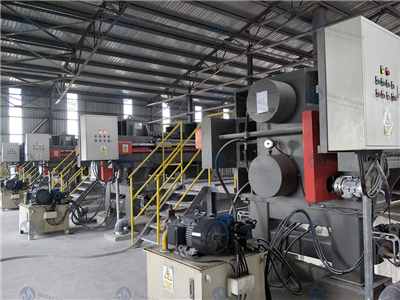


Monitoring parameters play a crucial role in a detergent powder production line. As a trusted supplier of detergent powder production lines, we understand the significance of these parameters in ensuring high - quality product output, efficient production processes, and cost - effective operations. In this blog, we will delve into the key monitoring parameters that are essential for a successful detergent powder production line.
1. Raw Material Quality
The quality of raw materials is the foundation of a good detergent powder. Different raw materials, such as surfactants, builders, fillers, and enzymes, need to be carefully monitored.
Surfactants
Surfactants are the active cleaning agents in detergent powder. Their concentration, purity, and chemical composition need to be closely monitored. For example, the hydrophilic - lipophilic balance (HLB) value of surfactants affects their cleaning performance. If the HLB value is not within the appropriate range, the detergent may not be able to effectively remove different types of stains. We ensure that the surfactants used in the production lines we supply meet strict quality standards.
Builders
Builders help to enhance the cleaning power of surfactants by softening the water and preventing the precipitation of calcium and magnesium ions. Parameters such as the particle size, solubility, and chelating ability of builders are important. A proper particle size ensures uniform mixing with other ingredients, and good solubility is necessary for the builder to function effectively in the washing process. Our production lines are equipped with advanced sensors to monitor the quality of builders at every stage of the production.
Fillers
Fillers are used to adjust the density and volume of the detergent powder. Their moisture content, particle size distribution, and chemical purity are critical. High moisture content in fillers can lead to clumping of the detergent powder during storage. By monitoring these parameters, we can ensure that the detergent powder has the right consistency and shelf - life.
Enzymes
Enzymes, such as proteases, amylases, and lipases, are added to detergent powder to break down specific types of stains. Their activity, stability, and compatibility with other ingredients need to be monitored. Enzyme activity can be affected by factors such as temperature, pH, and the presence of other chemicals. Our production lines are designed to maintain the optimal conditions for enzyme stability and activity.
2. Mixing Parameters
Proper mixing of raw materials is essential to ensure a homogeneous detergent powder. Several parameters need to be monitored during the mixing process.
Mixing Time
The mixing time determines how well the different ingredients are blended. If the mixing time is too short, the detergent powder may have uneven distribution of components, leading to inconsistent cleaning performance. On the other hand, over - mixing can cause degradation of some sensitive ingredients. We use precision timers in our production lines to control the mixing time accurately.
Mixing Speed
The speed at which the mixer operates also affects the quality of the mixture. A suitable mixing speed ensures that all ingredients are thoroughly mixed without causing excessive heat generation or mechanical damage to the particles. Our production lines are equipped with variable - speed mixers, and the speed can be adjusted according to the specific requirements of the detergent formulation.
Temperature during Mixing
Temperature can have a significant impact on the mixing process. Some ingredients may melt or react at high temperatures, while low temperatures may affect the solubility and flowability of the mixture. We monitor the temperature inside the mixer and use heating or cooling systems as needed to maintain the optimal temperature range.


3. Granulation Parameters
Granulation is an important step in detergent powder production, which involves forming the powder into granules of a desired size and shape.
Granule Size
The granule size affects the solubility, flowability, and packaging of the detergent powder. A uniform granule size ensures consistent performance and easy handling. We use sieving machines and particle size analyzers in our production lines to monitor and control the granule size. If the granule size is not within the specified range, the production process can be adjusted accordingly.
Granule Density
The density of the granules is related to their porosity and compaction. Proper granule density is necessary for the detergent powder to dissolve quickly in water and to have good storage stability. Our production lines are equipped with density measurement devices to ensure that the granules have the right density.
Binder Addition
Binders are used to hold the granules together. The amount and type of binder added need to be carefully controlled. Too much binder can make the granules too hard and difficult to dissolve, while too little binder can result in loose granules that may break apart during handling. We monitor the binder addition rate and ensure that it is in line with the granulation requirements.
4. Drying Parameters
Drying is a critical step to remove excess moisture from the detergent powder and improve its stability.
Drying Temperature
The drying temperature affects the drying rate and the quality of the detergent powder. High temperatures can cause thermal degradation of some ingredients, while low temperatures may result in incomplete drying. Our production lines are equipped with temperature - controlled dryers, and the temperature is continuously monitored to ensure optimal drying conditions.
Drying Time
The drying time is also an important parameter. Insufficient drying time can leave the powder with high moisture content, which can lead to spoilage and clumping. On the other hand, over - drying can increase energy consumption and may damage the product. We use moisture sensors to determine the moisture content of the powder during drying and adjust the drying time accordingly.
Airflow in the Dryer
Proper airflow in the dryer is necessary for efficient heat transfer and moisture removal. We monitor the airflow rate and direction to ensure that all parts of the powder are evenly dried. Our dryers are designed with adjustable airflow systems to meet the specific drying requirements of different detergent formulations.
5. Packaging Parameters
The final step in the detergent powder production line is packaging, and several parameters need to be monitored to ensure the quality of the packaged product.
Packaging Weight
Accurate packaging weight is important for customer satisfaction and compliance with regulations. Our production lines are equipped with weighing scales that can measure the weight of each package with high precision. If the weight deviates from the set value, the packaging process can be adjusted immediately.
Sealing Quality
Good sealing of the packages is essential to prevent moisture ingress, product leakage, and contamination. We monitor the sealing temperature, pressure, and time to ensure that the packages are properly sealed. Our packaging machines are equipped with sensors to detect any sealing defects and reject the defective packages.
Labeling Accuracy
Correct labeling of the detergent powder packages is necessary to provide customers with information about the product, such as its ingredients, usage instructions, and safety warnings. We use barcode scanners and vision systems to ensure that the labels are accurately applied and contain the correct information.
Conclusion
Monitoring these parameters in a detergent powder production line is essential for producing high - quality detergent powder. As a supplier of detergent powder production lines, we are committed to providing our customers with advanced equipment and solutions that can effectively monitor and control these parameters. Our production lines are designed to be flexible, efficient, and reliable, allowing our customers to meet the diverse needs of the market.
If you are interested in our detergent powder production lines or have any questions about the monitoring parameters, we invite you to [contact us for a detailed discussion]. We can offer you tailored solutions based on your specific requirements. Whether you are looking for a small - scale production line or a large - scale turnkey project, we have the expertise and experience to support you.
We also offer related production lines such as the Turnkey Project CaCl₂ Calcium Chloride Production Line – Fully Automatic System and the Solid Sodium Silicate Production Line. These additional production lines can complement your detergent powder production and provide you with a more comprehensive solution.
References
- "Detergent Technology Handbook" by David Soberman
- "Principles of Powder Technology" by A. D. Sarma
- Industry reports on detergent powder production and quality control