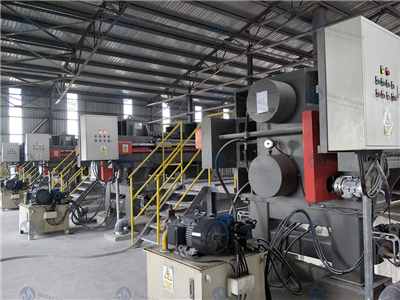


Hey there! As a supplier of Stone Wool Production Lines, I'm super stoked to walk you through the production process flow of a stone wool production line. It's a fascinating journey from raw materials to the final product, and I'll break it down step by step.
Step 1: Raw Material Preparation
The first thing we need to do is gather the right raw materials. Stone wool is typically made from basalt rock, which is a common volcanic rock. We also throw in some other additives like coke or slag to help with the melting process. These raw materials are carefully selected for their quality and composition to ensure the best possible end product.
Once we've got our raw materials, they're crushed into smaller pieces. This makes them easier to handle and process in the next steps. The crushed materials are then stored in silos, ready to be fed into the furnace.
Step 2: Melting in the Furnace
Next up, the crushed raw materials are fed into a furnace. This is where the magic happens! The furnace heats the materials to extremely high temperatures, usually around 1400 - 1600 degrees Celsius. At these temperatures, the rocks and additives melt into a molten liquid.
We use a Heating Incinerator For Rock Wool Production Line to achieve these high temperatures efficiently. The furnace is designed to maintain a consistent temperature and ensure that the melting process is uniform. This is crucial for producing high - quality stone wool.
Step 3: Fiberization
Once the materials are melted, it's time to turn that molten liquid into fibers. This is done through a process called fiberization. There are a few different methods for fiberization, but one of the most common is the centrifugal method.
In the centrifugal method, the molten liquid is poured onto a high - speed spinning wheel. The centrifugal force throws the liquid outwards, stretching it into thin fibers. These fibers are then carried away by a stream of air or steam.
The quality of the fibers is very important. We need to make sure they're the right length, diameter, and density. This affects the insulation properties and strength of the final stone wool product.


Step 4: Binder Application
After the fibers are formed, we apply a binder to them. The binder helps to hold the fibers together and gives the stone wool its shape and strength. There are different types of binders available, such as phenolic resins or starch - based binders.
The binder is usually sprayed onto the fibers as they're being collected. This ensures that it's evenly distributed throughout the fiber mass. The amount of binder used is carefully controlled to achieve the desired properties of the final product.
Step 5: Forming and Shaping
Once the binder is applied, the fibers are collected on a conveyor belt. This is where the stone wool starts to take its final shape. The conveyor belt moves the fibers through a forming chamber, where they're compressed and shaped into the desired thickness and width.
We can produce stone wool in different forms, such as blankets, boards, or pipes. The forming process is adjusted depending on the final product we're making. For example, if we're making a stone wool board, the fibers are compressed more tightly to give it a rigid structure.
Step 6: Curing
After the stone wool is formed and shaped, it goes through a curing process. The curing process helps to harden the binder and make the stone wool more stable. This is usually done in an oven or a curing chamber, where the temperature and humidity are carefully controlled.
During curing, the binder undergoes a chemical reaction that makes it stronger and more resistant to moisture and other environmental factors. The curing time can vary depending on the type of binder and the thickness of the stone wool product.
Step 7: Cutting and Packaging
Once the stone wool is cured, it's time to cut it into the right sizes. We use specialized cutting machines to cut the stone wool blankets or boards into the dimensions required by our customers.
After cutting, the stone wool products are packaged. They're usually wrapped in plastic or paper to protect them during transportation and storage. The packaging also helps to keep the products clean and dry.
Step 8: Quality Control
Throughout the entire production process, we have strict quality control measures in place. We test the raw materials before they go into the furnace to make sure they meet our standards. We also test the fibers, the binder, and the final stone wool products at various stages of production.
We check for things like density, thermal conductivity, tensile strength, and fire resistance. Only products that pass our rigorous quality control tests are sent out to our customers.
Why Choose Our Stone Wool Production Line
Our Stone Wool Production Line is designed to be highly efficient and reliable. We use the latest technology and high - quality components to ensure that our production lines can produce top - notch stone wool products.
Our High Efficiency Rock Wool Production Line is optimized for energy efficiency, which means lower production costs for you. It also has a high production capacity, so you can meet the demands of your customers quickly.
If you're in the market for a stone wool production line, I'd love to talk to you. Whether you're just starting out in the stone wool business or looking to upgrade your existing production line, we've got the solutions for you. Contact us to discuss your specific needs and let's work together to get you the best stone wool production line for your operation.
References
- Industry reports on stone wool production technology
- Technical manuals for stone wool production equipment
So there you have it, the complete production process flow of a stone wool production line. I hope this blog has given you a better understanding of how stone wool is made and why our production lines are a great choice. Looking forward to hearing from you!