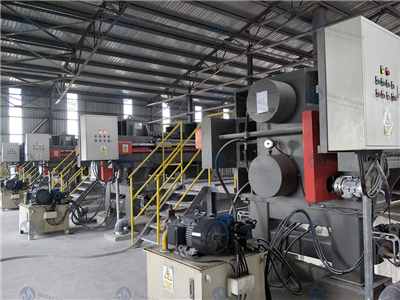


Temperature control is a critical aspect of the detergent production process. As a leading supplier of Detergent Production Lines, I understand the significance of maintaining optimal temperatures throughout the manufacturing process. In this blog, I will share some insights and strategies on how to effectively control the temperature during detergent production in a line.


Understanding the Importance of Temperature Control in Detergent Production
The quality and performance of detergents are highly dependent on the temperature at which they are produced. Different stages of the production process, such as mixing, heating, and cooling, require specific temperature ranges to ensure the proper chemical reactions and physical properties of the final product.
For instance, during the mixing stage, the temperature needs to be carefully controlled to ensure that the ingredients are thoroughly blended and dissolved. If the temperature is too low, the ingredients may not mix properly, resulting in a non - uniform product. On the other hand, if the temperature is too high, some of the ingredients may degrade or react in an unwanted way, affecting the quality of the detergent.
In the heating stage, temperature control is essential for activating chemical reactions, such as saponification in the case of soap - based detergents. Precise temperature regulation ensures that the reactions proceed at the right pace and to the desired extent. During the cooling stage, rapid and controlled cooling is often required to solidify or stabilize the detergent product, preventing it from becoming too soft or losing its shape.
Factors Affecting Temperature in Detergent Production
Several factors can influence the temperature during detergent production. One of the primary factors is the exothermic or endothermic nature of the chemical reactions involved. Many detergent manufacturing processes involve exothermic reactions, which release heat. If this heat is not properly managed, it can cause the temperature to rise uncontrollably, leading to product quality issues.
The heat transfer characteristics of the equipment also play a crucial role. The efficiency of heat exchangers, reactors, and other processing units can affect how quickly the temperature can be adjusted. Poor heat transfer can result in uneven temperature distribution within the production line, leading to inconsistent product quality.
The ambient temperature and humidity can also have an impact on the production process. In hot and humid environments, it may be more challenging to maintain the desired low temperatures, while in cold environments, additional energy may be required to heat the materials to the appropriate levels.
Strategies for Temperature Control in Detergent Production Lines
1. Advanced Equipment Selection
Investing in high - quality equipment with excellent temperature control capabilities is essential. Our company offers a range of advanced detergent production lines, such as the Liquid Detergent Small Scale Full Production Line | Detergent Liquid Making Machine For Daily Chemical Industry. These lines are equipped with state - of - the - art temperature sensors and control systems that can accurately monitor and adjust the temperature in real - time.
The PLC Control Liquid Detergent Production Line For Chemical Industry is another example of our cutting - edge technology. It uses Programmable Logic Controllers (PLCs) to precisely regulate the temperature at each stage of the production process. PLCs can be programmed to respond to specific temperature setpoints and make automatic adjustments, ensuring consistent product quality.
2. Heat Exchangers
Heat exchangers are vital components in temperature control. They can be used to transfer heat between different fluids or to remove excess heat from the production process. For example, in a continuous production line, a heat exchanger can be used to cool the hot detergent mixture before it enters the next processing stage. By carefully selecting the type and size of the heat exchanger, we can ensure efficient heat transfer and precise temperature control.
3. Insulation
Proper insulation of the production equipment and pipelines is crucial for minimizing heat loss or gain. Insulating materials can help maintain the desired temperature within the equipment, reducing the energy required for heating or cooling. This not only improves the energy efficiency of the production process but also helps to ensure more stable temperature conditions.
4. Process Monitoring and Automation
Continuous monitoring of the temperature at various points in the production line is essential. Our Liquid Detergents Making Equipment is equipped with advanced sensors that can provide real - time temperature data. This data can be used to adjust the temperature control systems automatically or to alert operators if there are any deviations from the setpoints.
Automation plays a significant role in temperature control. By using automated valves, pumps, and other control devices, the temperature can be adjusted quickly and accurately in response to changing process conditions. This reduces the risk of human error and ensures consistent product quality.
5. Cooling Systems
In many detergent production processes, cooling systems are required to bring the temperature of the product down to the desired level. These systems can include water - cooled or air - cooled chillers. The choice of cooling system depends on factors such as the cooling capacity required, the available resources, and the environmental conditions.
Troubleshooting Temperature Control Issues
Even with the best - designed temperature control systems, issues may still arise. Some common problems include inaccurate temperature readings, slow temperature response, and temperature fluctuations.
If the temperature readings are inaccurate, it could be due to faulty sensors. Regular calibration of the temperature sensors is essential to ensure their accuracy. In case of slow temperature response, it may be necessary to check the heat transfer efficiency of the equipment, such as the heat exchangers or the heating elements. Clogged pipes or fouled heat exchanger surfaces can reduce heat transfer and slow down the temperature adjustment process.
Temperature fluctuations can be caused by unstable power supply, improper control settings, or external factors such as sudden changes in ambient temperature. By carefully analyzing the root cause of the problem, appropriate corrective actions can be taken, such as adjusting the control parameters, improving the power supply stability, or providing additional insulation.
Conclusion
Controlling the temperature during the detergent production process is a complex but essential task. As a supplier of Detergent Production Lines, we are committed to providing our customers with the most advanced and reliable equipment and solutions for temperature control. Our range of products, including the Liquid Detergent Small Scale Full Production Line | Detergent Liquid Making Machine For Daily Chemical Industry, PLC Control Liquid Detergent Production Line For Chemical Industry, and Liquid Detergents Making Equipment, are designed to meet the diverse needs of the detergent manufacturing industry.
If you are looking to optimize your detergent production process and improve temperature control, we invite you to contact us for a detailed discussion. Our team of experts will be happy to assist you in selecting the right equipment and solutions for your specific requirements.
References
- Perry, R. H., & Green, D. W. (1997). Perry's Chemical Engineers' Handbook. McGraw - Hill.
- Doraiswamy, L. K., & Sharma, M. M. (1984). Heterogeneous Reactions: Analysis, Examples, and Reactor Design. Wiley.