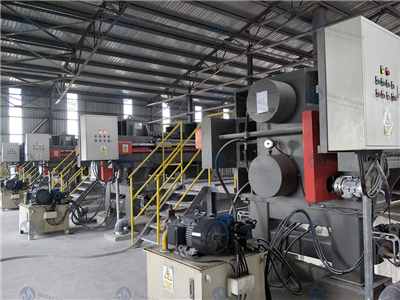


Designing a calcium chloride production line according to specific needs is a complex yet rewarding process. As a supplier of calcium chloride production lines, I have witnessed firsthand the importance of tailoring each line to meet the unique requirements of our clients. In this blog post, I will share some key considerations and steps involved in designing a customized calcium chloride production line.
Understanding the Specific Needs
The first step in designing a calcium chloride production line is to thoroughly understand the specific needs of the client. This includes factors such as the desired production capacity, the quality requirements of the calcium chloride product, the available raw materials, and the budget constraints. For example, some clients may require a high-capacity production line to meet large-scale industrial demands, while others may need a smaller, more flexible line for niche applications.


It is also important to consider the end-use of the calcium chloride product. Different applications may have different purity and particle size requirements. For instance, calcium chloride used in the food industry may need to meet strict food-grade standards, while that used in de-icing applications may have different specifications. By understanding these specific needs, we can design a production line that is optimized for the intended use of the product.
Selecting the Appropriate Technology
Once the specific needs are understood, the next step is to select the appropriate technology for the production line. There are several methods for producing calcium chloride, including the reaction of limestone with hydrochloric acid, the extraction from natural brines, and the recovery from industrial waste streams. Each method has its own advantages and disadvantages, and the choice depends on factors such as the availability of raw materials, the cost of production, and the environmental impact.
For example, if natural brines are readily available in the area, the extraction method may be a cost-effective option. On the other hand, if there is a large amount of industrial waste containing calcium chloride, the recovery method can be an environmentally friendly choice. As a supplier, we have extensive experience in evaluating these different technologies and can recommend the most suitable one for our clients based on their specific needs.
Designing the Process Flow
After selecting the technology, we need to design the process flow for the production line. This involves determining the sequence of operations, the equipment required for each step, and the control systems needed to ensure efficient and safe operation. A well-designed process flow can minimize energy consumption, reduce waste generation, and improve the overall productivity of the production line.
For instance, in a typical calcium chloride production process, the raw materials are first pre-treated to remove impurities. Then, they are reacted in a reactor to form calcium chloride solution. The solution is then concentrated, crystallized, and dried to obtain the final product. Each of these steps requires specific equipment, such as reactors, evaporators, crystallizers, and dryers. We carefully select the appropriate equipment based on the production capacity and the quality requirements of the product.
Equipment Selection and Sizing
The selection and sizing of equipment are crucial for the performance of the production line. We need to choose equipment that is reliable, efficient, and easy to maintain. At the same time, the equipment should be sized appropriately to match the production capacity of the line. For example, if the production capacity is high, we need to select larger reactors and evaporators to handle the increased volume of materials.
In addition to the main production equipment, we also need to consider the auxiliary equipment, such as pumps, valves, and pipelines. These components play an important role in ensuring the smooth operation of the production line. We carefully select these auxiliary equipment based on their compatibility with the main equipment and the specific requirements of the process.
Safety and Environmental Considerations
Safety and environmental protection are of utmost importance in the design of a calcium chloride production line. We need to ensure that the production process is safe for the operators and does not cause any harm to the environment. This involves implementing appropriate safety measures, such as installing safety valves, emergency stop buttons, and protective barriers.
In terms of environmental protection, we need to minimize the generation of waste and emissions. For example, we can design the production line to recycle and reuse waste materials, and use energy-efficient equipment to reduce energy consumption. We also need to comply with all relevant environmental regulations and standards.
Quality Control and Monitoring
To ensure the quality of the calcium chloride product, we need to implement a comprehensive quality control and monitoring system. This includes setting up quality control points at various stages of the production process, using advanced analytical techniques to test the product quality, and implementing a feedback mechanism to adjust the production process if necessary.
For example, we can use online sensors to monitor the concentration, temperature, and pH of the reaction solution in real-time. This allows us to detect any deviations from the desired parameters and take corrective actions immediately. We also conduct regular laboratory tests on the final product to ensure that it meets the specified quality standards.
Integration and Commissioning
Once the design of the production line is completed, we need to integrate all the equipment and systems and commission the line. This involves installing the equipment, connecting the pipelines and electrical systems, and conducting a series of tests to ensure that the production line is operating properly.
During the commissioning process, we work closely with the client to provide training on the operation and maintenance of the production line. We also provide after-sales support to ensure that the client can operate the production line smoothly and efficiently.
Conclusion
Designing a calcium chloride production line according to specific needs requires a comprehensive understanding of the client's requirements, the selection of appropriate technology, the design of an efficient process flow, the careful selection and sizing of equipment, and the implementation of safety and environmental measures. As a supplier of calcium chloride production lines, we have the expertise and experience to design and build customized production lines that meet the unique needs of our clients.
If you are interested in our Calcium Chloride Production Line Cacl2 Processing Line, Turnkey Project CaCl2 Calcium Chloride Production Line, or Optimized Calcium Chloride Production Line For Efficient Bulk Manufacturing, please feel free to contact us for further information and to discuss your specific needs. We are committed to providing you with the best solutions and services.
References
- Perry, R. H., & Green, D. W. (Eds.). (2008). Perry's Chemical Engineers' Handbook. McGraw-Hill.
- Kirk-Othmer Encyclopedia of Chemical Technology. Wiley.
- Chemical Engineering Design: Principles, Practice and Economics of Plant and Process Design. Sinnott, R. K., & Towler, G. P. (Eds.). Butterworth-Heinemann.