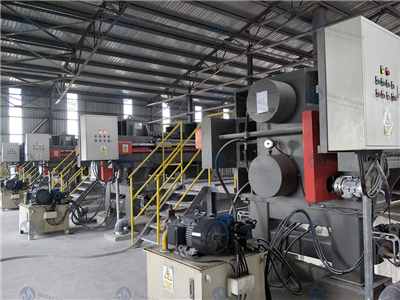


In the detergent powder production industry, powder density control stands as a critical factor that directly influences the quality, performance, and market competitiveness of the final product. As a seasoned supplier of detergent powder production lines, I've witnessed firsthand the challenges that manufacturers face in achieving consistent and precise powder density. In this blog post, I'll share some effective strategies and best practices to help you improve powder density control in your detergent powder production line.
Understanding the Importance of Powder Density Control
Powder density is not just a random metric; it has far - reaching implications for the detergent powder. Firstly, it affects the packaging and storage of the product. A consistent powder density ensures that the right amount of detergent is packed into each container, preventing under - or over - filling. This not only improves the aesthetic appeal of the product on the shelves but also ensures accurate dosing for the end - users.
Secondly, powder density impacts the solubility and performance of the detergent. A powder with the correct density dissolves more easily in water, releasing the active ingredients effectively and providing better cleaning results. On the other hand, inconsistent density can lead to poor solubility, leaving behind residues in the washing machine and on the laundry.
Factors Affecting Powder Density in Detergent Production
Before we delve into the solutions, it's essential to understand the factors that influence powder density in the production process.


Raw Materials
The nature and quality of raw materials play a significant role in determining powder density. Different raw materials have different densities, and their proportions in the detergent formulation can greatly affect the final powder density. For example, some fillers may have a lower density, while active ingredients might be denser. Variations in the moisture content of raw materials can also impact density. High - moisture raw materials can lead to clumping and an increase in apparent density.
Mixing Process
The mixing process is crucial for achieving a homogeneous blend of raw materials. Inadequate mixing can result in uneven distribution of ingredients, leading to variations in powder density. The speed, time, and intensity of mixing all need to be carefully controlled. If the mixing is too fast, it may cause excessive aeration, reducing the powder density. Conversely, insufficient mixing can leave pockets of unmixed ingredients with different densities.
Drying Process
The drying process is another key factor. Over - drying can cause the powder to become too light, while under - drying can result in a higher moisture content and increased density. The temperature, airflow, and residence time in the dryer all need to be optimized to ensure consistent drying and a stable powder density.
Granulation Process
In detergent powder production, granulation is often used to improve the flowability and appearance of the powder. The granulation method, such as spray - drying or fluid - bed granulation, can have a significant impact on powder density. The size and shape of the granules also contribute to the overall density. Larger granules generally have a lower density compared to smaller ones.
Strategies to Improve Powder Density Control
Optimize Raw Material Selection and Preparation
- Standardize Raw Materials: Work closely with your suppliers to ensure the consistency of raw material quality. Establish strict quality control measures for incoming raw materials, including density, moisture content, and particle size.
- Pre - treat Raw Materials: If necessary, pre - treat raw materials to adjust their moisture content or particle size. For example, you can use drying equipment to reduce the moisture content of high - moisture raw materials before mixing.
Enhance the Mixing Process
- Invest in High - Quality Mixers: Choose mixers that are capable of providing thorough and uniform mixing. Consider factors such as mixing capacity, mixing speed, and the design of the mixing blades.
- Optimize Mixing Parameters: Conduct experiments to determine the optimal mixing speed, time, and intensity for your specific detergent formulation. Monitor the mixing process closely and make adjustments as needed.
Fine - tune the Drying Process
- Use Advanced Drying Technology: Invest in state - of - the - art drying equipment, such as fluid - bed dryers or spray dryers. These technologies offer better control over drying parameters and can help achieve more consistent powder density.
- Monitor and Control Drying Conditions: Continuously monitor the temperature, airflow, and residence time in the dryer. Use sensors and automated control systems to maintain stable drying conditions.
Improve the Granulation Process
- Select the Right Granulation Method: Choose the granulation method that is most suitable for your detergent formulation and production requirements. Consider factors such as granule size, shape, and density.
- Control Granulation Parameters: Optimize the parameters of the granulation process, such as the feed rate, atomization pressure (in the case of spray - drying), and the temperature and humidity in the granulation chamber.
Implementing Quality Control Measures
To ensure long - term success in powder density control, it's essential to implement a comprehensive quality control system.
In - process Monitoring
Install sensors and monitoring devices at critical points in the production line to measure powder density in real - time. This allows you to detect any deviations from the desired density and take corrective actions immediately. For example, you can use density meters to measure the density of the powder at the outlet of the mixer, dryer, or granulator.
Statistical Process Control (SPC)
Apply SPC techniques to analyze the data collected from in - process monitoring. By using control charts and statistical analysis, you can identify trends and patterns in powder density variations. This helps you to proactively adjust the production process to maintain consistent density.
Final Product Testing
Conduct regular quality tests on the final detergent powder to ensure that it meets the specified density requirements. Use standardized testing methods, such as the bulk density test or the tapped density test, to accurately measure the powder density.
The Role of Advanced Technology and Equipment
As a detergent powder production line supplier, we are constantly investing in research and development to offer the latest technology and equipment to our customers. For example, our Turnkey Project CaCl₂ Calcium Chloride Production Line – Fully Automatic System is designed to provide precise control over the production process, which can indirectly contribute to better powder density control. This fully automatic system ensures consistent raw material feeding, mixing, and drying, reducing the chances of density variations.
Another example is our Solid Sodium Silicate Production Line. Sodium silicate is an important raw material in detergent production, and having a reliable production line for it can help maintain the quality and consistency of the raw material, which is crucial for powder density control.
Conclusion
Improving powder density control in a detergent powder production line is a complex but achievable goal. By understanding the factors that affect powder density, implementing effective strategies, and investing in advanced technology and equipment, you can achieve consistent and precise powder density. This not only improves the quality of your detergent powder but also enhances your competitiveness in the market.
If you are looking to upgrade your detergent powder production line or need professional advice on powder density control, we are here to help. Our team of experts has extensive experience in the detergent production industry and can provide customized solutions to meet your specific needs. Contact us today to start a discussion about how we can work together to improve your production process and product quality.
References
- "Detergent Technology Handbook" by David Soares.
- "Powder Technology: Fundamentals and Applications" by John C. Williams.
- Industry reports on detergent powder production and quality control.