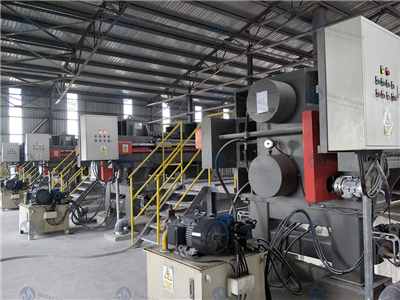


Selecting the right grinding equipment for a quartz sand production line is a crucial decision that can significantly impact the efficiency, quality, and profitability of your operations. As a reputable quartz sand production line supplier, I understand the complexities involved in this process. In this blog post, I'll share some key considerations and guidelines to help you make an informed choice.
Understanding the Basics of Quartz Sand Grinding
Quartz sand is a widely used industrial mineral with applications in various industries, including glass manufacturing, foundry, ceramics, and construction. The grinding process is essential for reducing the size of quartz particles to the desired fineness, which can improve the material's reactivity and enhance its performance in different applications.


There are several types of grinding equipment available for quartz sand production, each with its own advantages and limitations. The most common types include ball mills, rod mills, vertical roller mills, and hammer mills.
Factors to Consider When Selecting Grinding Equipment
1. Production Capacity
The first factor to consider when selecting grinding equipment is the required production capacity. This will depend on the scale of your quartz sand production line and the market demand for your products. If you have a large-scale production line, you'll need equipment with a high throughput capacity to meet your production targets. On the other hand, if you have a small-scale operation, a smaller and more compact grinding machine may be sufficient.
2. Particle Size Requirements
The desired particle size of the quartz sand is another important consideration. Different applications require different particle sizes, so you need to choose grinding equipment that can produce the required fineness. For example, in the glass manufacturing industry, a finer particle size is often preferred to improve the clarity and strength of the glass. Some grinding machines, such as ball mills, are capable of producing very fine particles, while others, like hammer mills, are more suitable for coarser grinding.
3. Energy Efficiency
Energy consumption is a significant cost factor in quartz sand production. Therefore, it's important to choose grinding equipment that is energy-efficient. Modern grinding machines are designed with advanced technologies to reduce energy consumption while maintaining high productivity. For instance, vertical roller mills are known for their energy efficiency compared to traditional ball mills. They use less energy to achieve the same grinding effect, which can result in significant cost savings over time.
4. Equipment Reliability and Maintenance
Reliability is crucial in a production environment. You need grinding equipment that can operate continuously without frequent breakdowns. Look for equipment from reputable manufacturers with a proven track record of reliability. Additionally, consider the ease of maintenance of the equipment. Simple and accessible maintenance procedures can reduce downtime and ensure the smooth operation of your production line.
5. Investment Cost
The initial investment cost is also an important consideration. Different types of grinding equipment have different price ranges, and you need to balance your budget with the performance and features of the equipment. While it may be tempting to choose the cheapest option, it's important to remember that quality and reliability often come at a price. Investing in high-quality grinding equipment may result in better long-term performance and lower overall costs.
Types of Grinding Equipment for Quartz Sand Production
1. Ball Mills
Ball mills are one of the most commonly used grinding equipment in quartz sand production. They consist of a rotating cylinder filled with grinding media, such as steel balls. As the cylinder rotates, the grinding media collide with the quartz particles, reducing their size. Ball mills are versatile and can produce a wide range of particle sizes. They are suitable for both wet and dry grinding processes. However, they are relatively energy-intensive and may require more maintenance compared to other types of grinding machines. You can learn more about efficient production lines related to industrial processes at Industrial Detergent Powder Production Line – Reasonable Process Design For Efficient Manufacturing.
2. Rod Mills
Rod mills are similar to ball mills but use long rods as grinding media instead of balls. They are often used for coarser grinding applications. Rod mills are more efficient than ball mills for grinding large particles and can produce a more uniform particle size distribution. They are also less prone to overgrinding, which can be an advantage in some applications.
3. Vertical Roller Mills
Vertical roller mills are a more advanced type of grinding equipment. They use rollers to grind the quartz sand against a rotating table. Vertical roller mills are known for their high energy efficiency, large production capacity, and ability to produce fine particles. They also have a smaller footprint compared to ball mills, which can be beneficial in limited space environments. You can find more information about high - efficiency drying machines for quartz sand at High Efficiency Quartz Sand Dryer Machine.
4. Hammer Mills
Hammer mills are simple and cost - effective grinding machines. They use rotating hammers to crush the quartz particles. Hammer mills are suitable for coarse grinding and can handle a wide range of feed materials. They are easy to operate and maintain, but they may not be able to produce very fine particles compared to other types of grinding equipment.
Choosing the Right Supplier
In addition to choosing the right type of grinding equipment, it's also important to choose the right supplier. As a quartz sand production line supplier, I can offer you a comprehensive range of grinding equipment and related services. Here are some reasons to choose a reliable supplier:
- Technical Expertise: A good supplier should have in - depth knowledge of quartz sand production and grinding technology. They can provide you with professional advice on equipment selection, process design, and troubleshooting.
- Customization: Every quartz sand production line is unique, and you may need customized solutions to meet your specific requirements. A reliable supplier can offer customized grinding equipment and production line design to fit your needs.
- After - sales Service: After - sales service is crucial for the long - term operation of your grinding equipment. A good supplier should provide prompt and efficient after - sales service, including installation, commissioning, maintenance, and spare parts supply.
Conclusion
Selecting the right grinding equipment for your quartz sand production line is a complex but important decision. By considering factors such as production capacity, particle size requirements, energy efficiency, equipment reliability, and investment cost, you can choose the most suitable grinding equipment for your needs. As a quartz sand production line supplier, I am committed to providing you with high - quality grinding equipment and comprehensive solutions. If you are interested in our products or need more information, please don't hesitate to contact me for procurement negotiation. We look forward to working with you to achieve your production goals.
References
- "Mineral Processing Design and Operations: An Introduction" by Barry A. Wills and Tim Napier - Munn
- "Handbook of Industrial Drying" by Arun S. Mujumdar