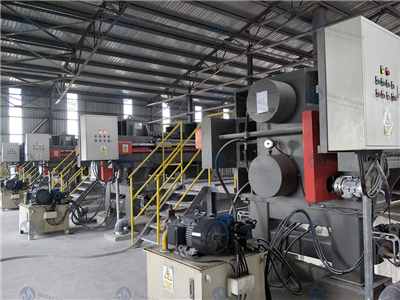


Hey there! As a supplier of Stone Wool Production Lines, I'm super stoked to share with you the main components of these amazing setups. Stone wool, also known as rock wool, is a versatile and eco - friendly insulation material. It's made from natural rocks, which are melted and spun into fibers. And a well - designed production line is key to churning out high - quality stone wool products.


Let's start with the raw material storage and feeding system. This is where the whole process kicks off. We've got big silos or storage areas for the raw materials, usually basalt or diabase rocks. These rocks are first crushed into smaller pieces and then stored. A conveyor belt or a feeding mechanism takes these crushed rocks to the next stage. It's important to have a stable and consistent feeding system because any fluctuations can mess up the quality of the final product.
Next up is the melting furnace. This is like the heart of the production line. The crushed rocks are fed into the furnace, where they're heated to extremely high temperatures, around 1400 - 1600 degrees Celsius. The furnace needs to be super efficient to melt the rocks evenly. There are different types of furnaces, like cupola furnaces and electric arc furnaces. Cupola furnaces use coke as a fuel, while electric arc furnaces use electricity to generate heat. Each has its pros and cons, but for a high - quality stone wool production line, picking the right furnace is crucial. You can check out our Heating Incinerator For Rock Wool Production Line for more info on the heating equipment.
Once the rocks are melted into a liquid state, it's time for the fiberizing process. This is when the molten rock is transformed into fine fibers. There are a couple of common methods for this. One is the centrifugal method, where the molten rock is poured onto a spinning wheel or a series of rotating discs. The high - speed rotation throws the molten material out in thin strands, which solidify into fibers as they cool. Another method is the blowing method, where high - pressure air or steam is used to blow the molten rock into fibers. The fiberizing equipment needs to be precise to ensure that the fibers are of uniform length and diameter. This directly affects the insulation performance and other properties of the final stone wool product.
After the fibers are formed, they need to be collected and formed into the desired shape. That's where the collecting and forming system comes in. The fibers are collected on a conveyor belt, and then binders are added to hold them together. These binders can be organic or inorganic, depending on the application of the stone wool product. Once the binders are added, the fibers are compressed and shaped into boards, blankets, or other forms. This part of the production line determines the density and thickness of the final product.
Now, we can't forget about the curing and drying process. The formed stone wool products are sent through a curing oven or a drying chamber. This step is important to remove any moisture and to fully cure the binders. The temperature and time in the curing process need to be carefully controlled. If it's too hot or too long, the product might become brittle. If it's not enough, the binders won't cure properly, and the product won't have the right strength.
Quality control is also a major component of the production line. There are various sensors and testing equipment along the line to check the quality of the fibers, the formed products, and the overall production process. For example, there are sensors to measure the temperature in the furnace, the diameter of the fibers, and the density of the final product. Any deviations from the set standards can be detected early, and adjustments can be made to ensure that only high - quality stone wool products are produced.
Lastly, the packaging and storage system is essential. Once the stone wool products pass the quality control checks, they're packaged in plastic wraps or cardboard boxes. This protects the products during transportation and storage. The packaged products are then stored in a warehouse until they're ready to be shipped to customers.
All these components work together like a well - oiled machine to produce top - notch stone wool products. And if you're in the market for a stone wool production line, we've got you covered. Our High Efficiency Rock Wool Production Line is designed to optimize every step of the production process, from raw material feeding to product packaging. It's built with the latest technology to ensure high productivity and excellent product quality.
If you're interested in our Stone Wool Production Line, don't hesitate to reach out. We're always happy to have a chat about your specific needs and how our production lines can fit into your business. Whether you're just starting out or looking to upgrade your existing setup, we've got the expertise and the equipment to make it happen. So, let's get the ball rolling and take your stone wool production to the next level!
References
- Industry reports on stone wool production technology.
- Technical manuals of stone wool production line equipment.