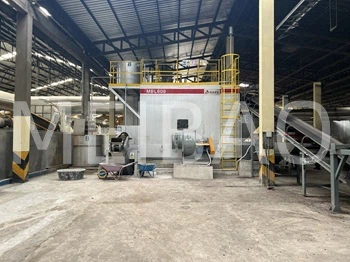


As a supplier of Quartz Sand Drying Screening Lines, I understand the paramount importance of safety in industrial operations. A well - designed and properly equipped drying and screening line not only ensures efficient production but also safeguards the well - being of workers and the integrity of the equipment. In this blog, I will introduce the key safety protection devices in a Quartz Sand Drying Screening Line.
1. Over - temperature Protection Devices
In a quartz sand drying process, high temperatures are often involved. Over - temperature situations can lead to equipment damage, fire hazards, and even explosion risks. One of the most common over - temperature protection devices is the temperature sensor. These sensors are strategically placed at critical points in the drying equipment, such as inside the drying chamber of an Industrial Quartz Rotary Sand Dryer.


When the temperature exceeds a pre - set limit, the sensor sends a signal to the control system. The control system then takes immediate action, which may include reducing the heat source, such as adjusting the burner output in a gas - fired dryer, or shutting down the equipment altogether to prevent further temperature rise. Another type of over - temperature protection is the thermal fuse. It is a one - time use device that melts when the temperature reaches a certain threshold, breaking the electrical circuit and stopping the operation of the equipment.
2. Pressure Relief Valves
Pressure can build up in various parts of the Quartz Sand Drying Screening Line, especially in the drying equipment where hot air is circulated under pressure. Pressure relief valves are essential safety devices that prevent excessive pressure from causing damage to the equipment or posing a safety risk to the operators.
These valves are designed to open automatically when the pressure inside the system exceeds a specified value. For example, in a pneumatic conveying system used to transport the dried quartz sand, if the pressure in the pipeline becomes too high due to blockages or other reasons, the pressure relief valve will open, allowing the excess air to escape and reducing the pressure to a safe level. This helps to prevent pipe bursts and other catastrophic failures.
3. Belt Conveyor Safety Devices
Belt conveyors are commonly used in the Quartz Sand Drying Screening Line to transport the quartz sand between different processing units. There are several safety devices associated with belt conveyors. One of the most important is the emergency stop switch. It is usually installed at regular intervals along the length of the conveyor. In case of an emergency, such as a worker getting caught in the conveyor or a mechanical failure, an operator can quickly press the emergency stop switch to immediately halt the conveyor's operation.
Another safety feature is the belt misalignment switch. Belt misalignment can cause the conveyor belt to wear unevenly, leading to premature failure and potential safety hazards. The belt misalignment switch detects when the belt starts to deviate from its normal position and sends a signal to the control system. The control system can then adjust the belt alignment or stop the conveyor to prevent further damage.
4. Dust Collection and Explosion - Proof Devices
Quartz sand processing generates a significant amount of dust. Inhalation of dust can cause serious health problems for workers, such as silicosis. Moreover, dust in the air can also pose an explosion risk if it accumulates in high concentrations and comes into contact with an ignition source.
Dust collection systems are installed in the Quartz Sand Drying Screening Line to capture and remove the dust from the air. These systems typically consist of dust collectors, such as bag filters or cyclone separators, which trap the dust particles. In addition to dust collection, explosion - proof devices are also used. For example, explosion - proof motors and electrical equipment are used in areas where there is a high risk of dust explosion. These devices are designed to prevent sparks or heat generated by the electrical components from igniting the dust in the air.
5. Safety Guards and Enclosures
Safety guards and enclosures are physical barriers that protect workers from coming into contact with moving parts of the equipment, such as rotating drums in the dryer or vibrating screens. They are made of materials such as metal or plastic and are designed to prevent accidental access to dangerous areas.
For example, the rotating drum of an Industrial Flash Dryer for Kaolin is usually enclosed by a safety guard. This guard not only protects workers from getting caught in the rotating drum but also reduces the risk of objects being thrown out of the drum during operation. Similarly, vibrating screens are often equipped with enclosures to prevent workers from being hit by the vibrating parts or the flying quartz sand.
6. Lock - out/Tag - out Devices
During maintenance and repair work on the Quartz Sand Drying Screening Line, it is crucial to ensure that the equipment is completely isolated from all energy sources to prevent accidental startup. Lock - out/Tag - out (LOTO) devices are used for this purpose.
Lock - out devices, such as padlocks, are used to physically lock the switches or valves that control the energy sources, such as electrical breakers, gas valves, or hydraulic valves. Tag - out devices are tags that are attached to the locked devices, indicating that the equipment is under maintenance and should not be operated. Only the authorized maintenance personnel who have the key to the lock can remove the lock and restore the energy supply after the maintenance work is completed.
7. Fire Detection and Suppression Systems
Fires can break out in the Quartz Sand Drying Screening Line due to various reasons, such as over - heating, electrical faults, or the presence of flammable materials. Fire detection systems, such as smoke detectors and heat detectors, are installed in the processing area to detect the early signs of a fire.
Once a fire is detected, the fire suppression system is activated. The most common type of fire suppression system used in industrial settings is the sprinkler system. It releases water or other fire - extinguishing agents when the temperature rises above a certain level, effectively controlling or extinguishing the fire. In some cases, dry chemical fire suppression systems are also used, especially in areas where water damage could be a concern.
8. Interlock Systems
Interlock systems are used to ensure that different parts of the Quartz Sand Drying Screening Line operate in a safe and coordinated manner. For example, in a system where the dryer is connected to a screening unit, an interlock system can be installed to ensure that the screening unit does not start until the dryer has reached a certain temperature and the quartz sand is properly dried.
This helps to prevent the processing of wet or inadequately dried sand, which can lead to clogging in the screening unit and other operational problems. Interlock systems can also be used to prevent the simultaneous operation of conflicting equipment, such as preventing the conveyor from running while the cleaning mechanism is in operation.
In conclusion, the safety protection devices in the Quartz Sand Drying Screening Line play a crucial role in ensuring the safety of workers, protecting the equipment, and maintaining the smooth operation of the production line. As a supplier, we are committed to providing high - quality equipment with comprehensive safety features. If you are interested in our Industrial Detergent Powder Production Line or other related products, or if you have any questions about the safety protection devices in our Quartz Sand Drying Screening Line, please feel free to contact us for further discussion and potential procurement.
References
- "Industrial Safety Handbook" by John Doe
- "Quartz Sand Processing Technology" by Jane Smith
- Manufacturer's manuals for various safety devices used in the Quartz Sand Drying Screening Line