
Zhejiang Meibao Industrial Technology Co., Ltd. is one of the leading manufacturers and suppliers of Automatic Detergent Powder Packing Machine in China. With abundant experience, we warmly welcome you to buy custom made Automatic Detergent Powder Packing Machine from our factory. For price consultation, contact us.
Automatic Detergent Powder Packing Machine
Filling and sealing finished detergent powder into bags, with feeding and discharge equipment configured around your plant.
An automatic detergent powder packing machine fills and seals bags of finished detergent powder. For a new installation, Meibao can configure the packing machine together with the equipment that feeds it from the finished powder silo and the conveyor that carries away filled bags. For a replacement project, Meibao can recommend a machine based on your bag format, net weight per bag and target output, and check how it will connect to your existing silo and conveyor.

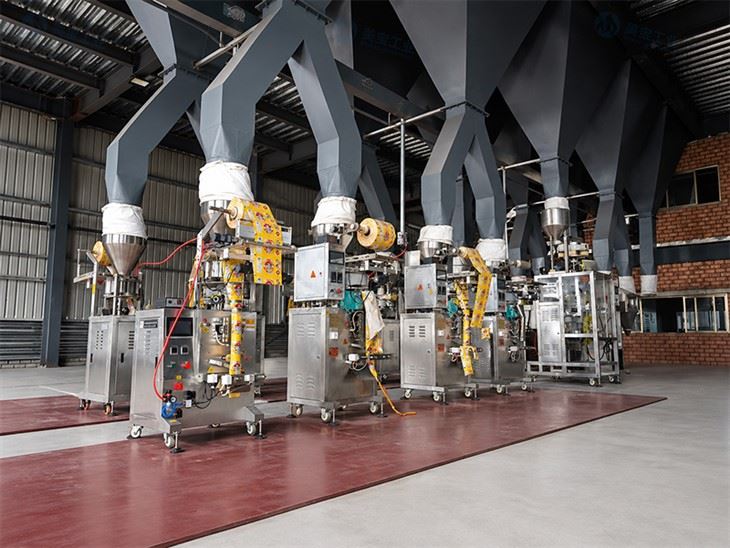
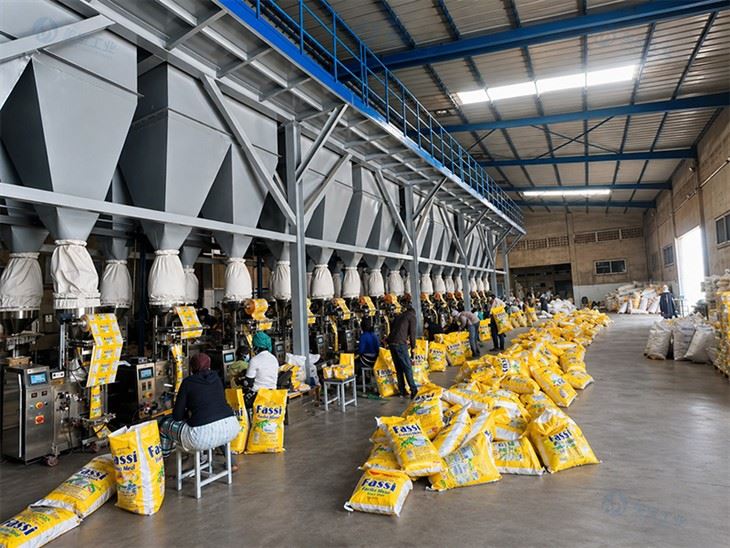
Automatic packing machines arranged beneath the finished powder silos.
New Installation
Packing machine, silo feeding equipment and filled-bag conveyor configured as one section.
Replacement Project
Machine selected for your bag format, net weight and output, with interfaces checked against existing equipment.
Defined Interfaces
The proposal identifies which equipment is new, which is retained and which connections need work.
Selecting a Machine for Your Pack Sizes
The bag formats and pack sizes a machine can handle depend on the powder, packaging material and target fill weight.
If you plan to run several sizes, the output required for each size and the frequency of changeovers also affect how many machines you need.
| Selection factor | Information to review | What the proposal should specify |
|---|---|---|
| Bag format and material | For film supplied on a roll, provide the film width, material and finished bag dimensions. For premade bags, provide a sample showing the dimensions and bag opening. | How the machine forms or loads the bag, fills it and seals it. |
| Powder and fill weight | Provide a representative powder sample, target net weight and allowable weight deviation. Include loose bulk density if available. | A suitable feeding and dosing method, with enough room at the top of the filled bag for sealing. The parties can agree on a sampling and weighing procedure, including how to deduct packaging tare weight when checking net contents. |
| Pack size changeovers | List the bag dimensions, net weight, planned quantity and changeover frequency for each size. | Which sizes can run on the same machine, which adjustments or change parts each size requires, and the estimated rate in bags per minute for each size. |
| Number of machines | Deduct planned stops for film changes and pack size changeovers from the scheduled packing time. Allocate the available running time to each size. | The number of machines required, based on the target output for each size and the estimated rate per machine for the specified powder, bag and fill weight requirements. |
Packing 1 tonne of detergent powder into 500 g bags requires 2,000 bags. The packing section must be sized against the available packing time and the estimated rate of the selected machine.
2,000 bags / 60 min = 33.3 bags per minute across the packing section
The number of machines depends on the estimated rate of one machine running that 500 g format.
How Roll-Fed Packing Works
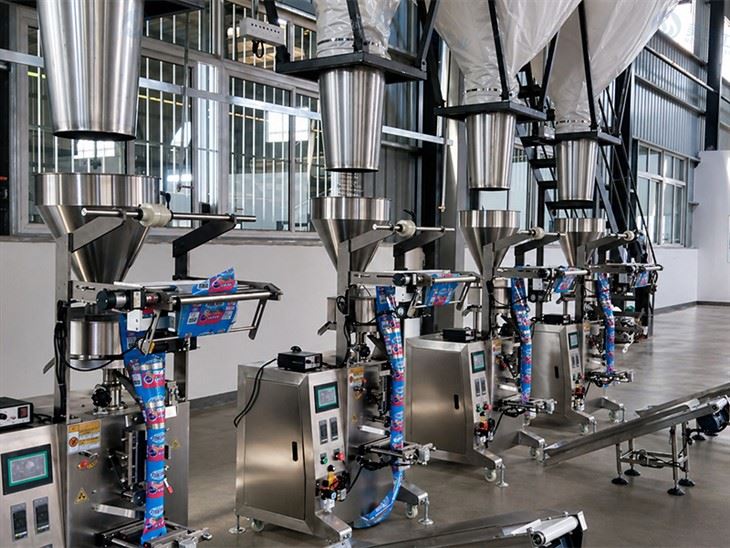
Packaging film passes over guide rollers and around a former, which shapes it into a tube. Finished detergent powder enters the dosing unit from the hopper above the machine. The unit dispenses the set quantity into the bag. The machine then seals and cuts the bag, which drops onto a discharge conveyor and travels to the collection point.

Film forming, filling and sealing stations on the packing machines.
For premade bags, the bag sample determines how the machine loads, opens and seals each bag. After discharge, operators can collect the filled packs into outer bags, or a conveyor can transfer them to downstream packing equipment.
Scope of Supply and Connections to Existing Equipment
Request a quotation for the packing machine alone, or include powder feeding, discharge conveying and downstream handling.
The quotation should identify the new equipment included, the items you will supply and the existing equipment you plan to retain.
| Packing stage | What to confirm in the quotation |
|---|---|
| Feeding from the finished powder silo | Identify who supplies the feeder and the connection to the machine. If you are keeping an existing silo, check the outlet position, its height above the floor and the installation space above the machine. If several machines share a silo, check that it can feed them simultaneously. |
| Dosing, filling and sealing | List the dosing, filling and sealing equipment included. For each main pack size, specify the bag format, net weight, estimated rate per machine and required fill weight tolerance. Identify which change parts are included and which are quoted separately. |
| Filled-bag conveying | Identify where filled bags leave the quoted equipment and whether the discharge conveyor is included. For an existing conveyor, check the transfer height and direction of travel. If several machines discharge onto one conveyor, check that both the conveyor and the collection point can handle their combined output. |
| Collecting retail packs into outer bags | Specify whether operators will collect the packs or transfer them to downstream equipment. Manual collection requires space for operators to receive the packs and move filled outer bags. If downstream equipment is required, identify the equipment and its supplier. |
For a retrofit, the proposal should also identify who will modify the connections, install the new equipment and commission it together with the existing equipment.

Silo outlets feeding the packing machines in a detergent powder plant.
100 g Detergent Powder Packs in Burkina Faso
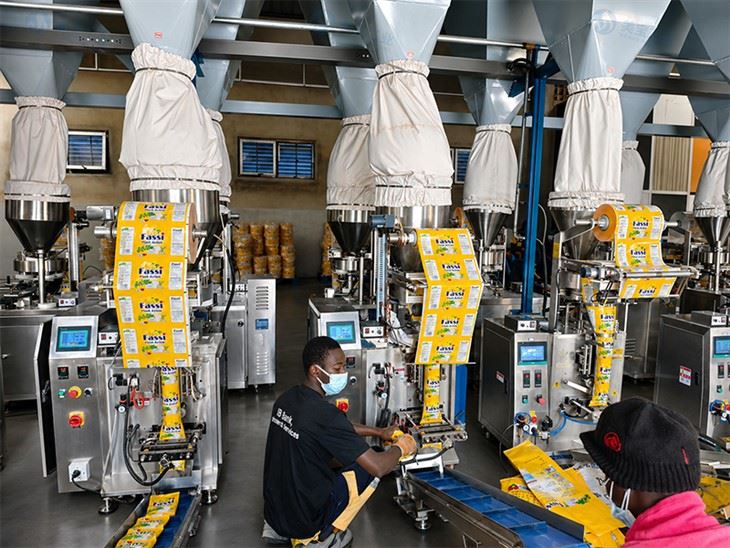
Several packing machines placed beneath the finished powder silo, producing 100 g retail packs.
For a detergent powder packing project in Burkina Faso, Meibao integrated several packing machines beneath the finished powder silo. Flexible connections linked the silo outlets to the machine hoppers. The retail packs produced at the site carried a declared net weight of 100 g.
Printed film was formed into bags on the machines. After sealing and cutting, the small packs dropped onto short conveyors, where operators collected them and placed them into outer bags. The packing system was commissioned and passed final acceptance.
Silo Connections
Flexible connections carried powder from the silo outlets into the packing machine hoppers.
Printed Film
The machines formed, sealed and cut the bags from printed film. Each pack was labeled 100 g.
Manual Packing into Outer Bags
Short conveyors delivered the packs to operators, who placed them into outer bags.

The Burkina Faso packing section producing 100 g detergent powder sachets.
Frequently Asked Questions
Request a Packing Proposal
Send a photo of your bag, the net weight per bag and your target packing output. Let us know whether you are planning a new packing section or replacing an existing machine. If you plan to keep an existing silo or conveyor, include a site photo showing the equipment.
Hot Tags: Automatic Detergent Powder Packing Machine, China Automatic Detergent Powder Packing Machine manufacturers, suppliers, factory, Solid Sodium Silicate Production Line, detergent powder production line, detergent packaging line