

Build Your Sodium Silicate Production Plant
From Raw Material and Energy Costs to Process Selection
Sodium silicate production is mainly divided into:
• Dry-Process Sodium Silicate Production Line
• Wet-Process Sodium Silicate Production Line
The two processes use different raw materials and energy sources and are suitable for different product specifications.
Therefore, project planning should first confirm the required product form, modulus and concentration, and then compare local raw material and energy costs to determine the suitable production route.

The raw materials are melted at high temperature to produce solid sodium silicate, which can also be further dissolved and adjusted to produce liquid sodium silicate.
- Modulus ≤3.6
- Solid sodium silicate
- Liquid sodium silicate
- No fixed concentration limit for liquid products; the system is designed according to the required product specification
The raw materials react under controlled temperature and pressure to directly produce liquid sodium silicate.
- Modulus ≤2.4
- Concentration ≤45%
- Liquid sodium silicate only
Dry-process / wet-process evaluation
Raw material and energy cost comparison
Product specification and capacity planning
Process design
Plant and equipment layout
Complete equipment manufacturing and supply
Automation system
Installation and commissioning
Operator training and technical support
Select the Production Route Based on Raw Material and Energy Costs
A sodium silicate production line should not be selected only according to equipment purchase cost.
Long-Term Production Economics
Long-term production economics are mainly affected by:
- Silica raw material price and quality
- Soda ash price
- Caustic soda price and concentration
- Natural gas / heavy fuel oil / light diesel price
- Steam price
- Electricity and labor costs
- Product modulus and concentration
- Production scale and operating hours
- Finished-product storage and transportation
Within the applicable product range, Meibao compares the dry and wet processes according to actual local conditions.

Main Cost Structure of the Dry Process
The dry process mainly uses silica sand and soda ash and produces sodium silicate through high-temperature melting. The main cost structure includes:
- Silica Sand
- Soda Ash
- Natural Gas / Heavy Fuel Oil / Light Diesel
- Electricity & Labor
- Other Operating Costs
Among these factors, soda ash price and melting-fuel cost are important factors affecting long-term dry-process economics.

Main Cost Structure of the Wet Process
The wet process mainly uses silica raw material and caustic soda, with steam as the main production energy source. The materials react under controlled temperature and pressure to directly produce liquid sodium silicate. The main cost structure includes:
- Silica Raw Material
- Caustic Soda
- Steam
- Electricity & Labor
- Other Operating Costs
Among these factors, caustic soda price and steam cost are important factors affecting wet-process economics.
Do Not Compare Only Soda Ash and Caustic Soda Prices
Simply comparing the purchase price per ton of soda ash and caustic soda is not enough to determine which process is more economical. The evaluation should also consider:
- Effective raw material content
- Raw material consumption
- Target product modulus
- Product concentration
- Dry-process fuel consumption
- Wet-process steam consumption
- Daily and annual operating hours
- Electricity and labor costs
- Finished-product storage
- Transportation distance
The final comparison should focus on the total production cost per unit of sodium silicate.
Meibao can use the customer's local raw material and energy prices to make an initial economic comparison of the applicable production routes.
Request a Process and Investment AssessmentDry-Process Sodium Silicate Production Line
The dry process mainly uses silica sand and soda ash. After weighing, batching and mixing, the raw materials enter the high-temperature melting system and react to form solid sodium silicate. The solid product can be sold directly or further dissolved, adjusted and filtered to produce liquid sodium silicate.

Dry-Process Product Range
Meibao dry-process sodium silicate production lines can be designed according to different product requirements:
- Product modulus ≤3.6
- Solid sodium silicate
- Liquid sodium silicate
- No fixed concentration limit for liquid sodium silicate; the downstream dissolution and adjustment system is designed according to the required product
The dry process provides a wider product range and is suitable for projects requiring solid products, multiple liquid product grades or higher-modulus sodium silicate.

The downstream dissolution and adjustment system is configured according to the required product modulus and liquid-product specifications.
- Silica sand and soda ash as the main raw materials
- High-temperature melting reaction
- Product modulus up to 3.6
- Direct production of solid sodium silicate
- Can be further processed into liquid sodium silicate
- No fixed concentration limit for liquid products
- Wider product application range
- Suitable for relatively large-scale continuous production
- Solid products are convenient for storage and long-distance transportation
- Automatic weighing, batching and centralized control can be configured


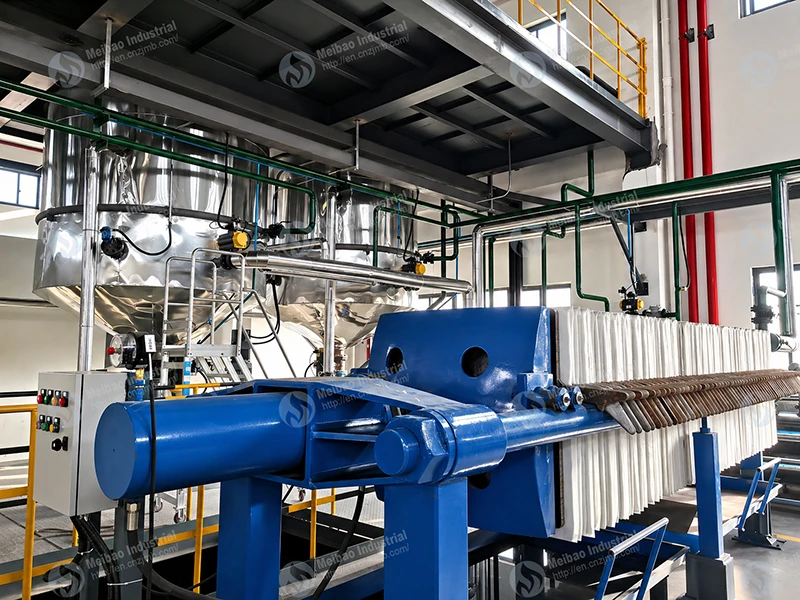
Meibao dry-process sodium silicate melting systems mainly use:
- Natural Gas
- Heavy Fuel Oil
- Light Diesel
The project should compare:
- Local fuel purchase price
- Fuel Lower Heating Value
- Fuel-supply stability
- Actual fuel consumption
- Fuel storage and supply conditions
- Combustion-system operating cost
Meibao configures the combustion and melting system according to the actual local fuel conditions.
- Solid sodium silicate production
- Plants requiring both solid and liquid sodium silicate
- Products with a modulus above 2.4 and up to 3.6
- Liquid products with concentrations above the wet-process range
- Plants requiring multiple liquid sodium silicate grades
- Regions where soda ash is economically attractive
- Locations with competitive natural gas, heavy fuel oil or light diesel costs
- Larger production capacities
- Products requiring long-distance transportation
Recommended information to provide based on your selected fuel type:
- Natural gas price
- Lower Heating Value
- Supply pressure
- Maximum available gas flow
- Supply stability
- Heavy fuel oil price
- Lower Heating Value
- Viscosity
- Density
- Storage and preheating conditions
- Light diesel price
- Lower Heating Value
- Density
- Supply stability
Wet-Process Sodium Silicate Production Line
The wet process mainly uses silica raw material and caustic soda, with steam as the main energy source. The materials react under controlled temperature and pressure to directly produce liquid sodium silicate. The wet process does not require the high-temperature melting stage used in the dry process.

Wet-Process Product Range
Meibao wet-process sodium silicate production lines are mainly suitable for:
- Modulus ≤2.4
- Concentration ≤45%
- Liquid Sodium Silicate Only
These three conditions define the main application range of the wet process.
If the customer requires:
- Solid sodium silicate
- Modulus >2.4
- Liquid concentration >45%
the dry process should be evaluated instead.
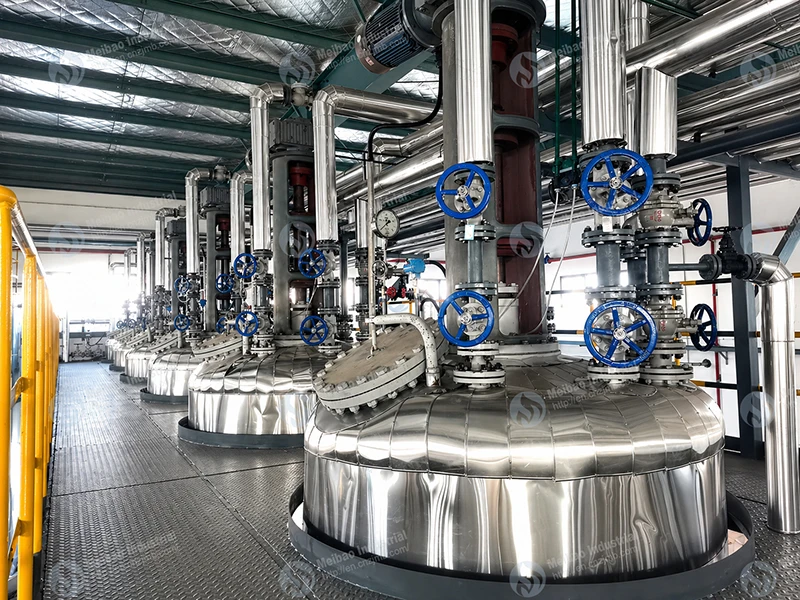
- Silica raw material and caustic soda as the main raw materials
- Steam as the main production energy source
- Direct production of liquid sodium silicate
- No high-temperature melting furnace required
- Product modulus ≤2.4
- Product concentration ≤45%
- Relatively compact process flow
- Automatic batching and reaction control can be configured
- Suitable for local use or relatively short-distance supply of liquid sodium silicate
The main factors include:
- Silica raw material quality and price
- Caustic soda specification and concentration
- Caustic soda price
- Caustic soda supply stability
- Target product modulus
- Target product concentration
- Production capacity
- Steam pressure
- Available steam capacity
- Steam price
- Electricity price
- Liquid-product storage conditions
- Transportation distance
If the required product is liquid sodium silicate with a modulus ≤2.4 and concentration ≤45%, and local caustic soda and steam costs are competitive, the wet process can be evaluated as a preferred production route.
How to Choose Between Dry and Wet Process
Sodium silicate process selection should follow a simple logic: Confirm the product specification first → Then compare raw material and energy costs.
Step 1: Confirm the Target Product
The main questions are:
- Solid or liquid sodium silicate?
- What is the required product modulus?
- What is the required concentration for liquid sodium silicate?


If the customer needs solid sodium silicate, the dry-process sodium silicate production line should be used. The solid sodium silicate can also be further dissolved to produce liquid products.
If the target modulus is >2.4 and ≤3.6, the dry process should be selected. This range is outside the wet-process capability.
If liquid sodium silicate is required with a concentration >45%, the wet process is not suitable. The dry process should be evaluated instead. The dry process does not have the 45% concentration limitation and the downstream dissolution and adjustment system can be designed according to the required liquid-product specification.
If the customer requires liquid sodium silicate with modulus ≤2.4 and concentration ≤45%, both dry and wet processes can be evaluated according to actual project economics.
The main comparison becomes:
- Dry Process: Silica Sand + Soda Ash + Natural Gas / Heavy Fuel Oil / Light Diesel Cost
- Wet Process: Silica Raw Material + Caustic Soda + Steam Cost
The final selection should also consider:
- Production capacity
- Daily and annual operating hours
- Product storage method
- Transportation distance
- Initial investment
- Long-term raw material supply stability
For target products with a modulus above 3.6, a separate technical evaluation is required according to the specific product specification and raw material conditions.
Raw Material and Energy Information
To evaluate the process and project economics accurately, customers are advised to provide the main raw material and energy information first.
Recommended information includes:
- SiO₂ content
- Fe₂O₃ and other major impurities
- Moisture content
- Particle size
- Local purchase price
- Supply capacity and stability
Please also provide:
- Soda ash specification
- Soda ash price
- Soda ash supply stability
- Proposed fuel: Natural Gas / Heavy Fuel Oil / Light Diesel
- Fuel price
- Fuel Lower Heating Value
- Additional gas or oil properties can be provided according to the selected fuel type

Please also provide:
- Caustic soda specification
- Caustic soda concentration
- Caustic soda price
- Caustic soda supply capacity
- Steam pressure
- Available steam capacity
- Steam price
- Electricity price
Meibao designs the production system according to the raw materials and energy sources that the customer can obtain reliably over the long term.
Finished-Product Storage and Transportation
Product form directly affects finished-product storage and logistics planning.


Main advantages include:
- Convenient for long-term storage
- Suitable for long-distance transportation
- Can be sold directly as a commercial product
- Can be further dissolved to produce liquid sodium silicate
- If solid sodium silicate is required, the dry process should be used
Depending on the required product range, the project may include:
- Finished-product storage tanks
- Separate storage for different modulus grades
- Separate storage for different liquid-product specifications
- Product transfer system
- Tanker loading system
Transportation distance has a significant influence on liquid sodium silicate logistics cost. If liquid sodium silicate is mainly used within the same plant for detergent powder, detergent or other production processes, the upstream and downstream capacities can be planned together to reduce unnecessary storage and transportation.
Selected Sodium Silicate Projects
Project references are mainly based on Meibao's existing sodium silicate production projects.


Planning a Sodium Silicate Production Plant?
Complex material-balance or process calculations are not required from the customer during the initial stage. Please first provide the following basic information:
Solid or liquid sodium silicate?
Target production capacity
Target product modulus
Target liquid-product concentration, if applicable
Product for internal use or external sales?
Local silica raw material price
Silica raw material analysis, if available
Local soda ash price
Local caustic soda price and concentration
Local natural gas price
Local heavy fuel oil price
Local light diesel price
Fuel Lower Heating Value
Steam pressure
Available steam capacity
Steam price
Local electricity price
Planned daily operating hours
New project or existing plant expansion?
Available plant and land conditions
Whether the Product Is Suitable for the Wet Process
The wet process requires all of the following: Liquid Product + Modulus ≤2.4 + Concentration ≤45%
Whether the Dry Process Should Be Used
The dry process should be evaluated first for:
- Solid sodium silicate
- Product modulus >2.4 and ≤3.6
- Liquid concentration >45%
- Projects requiring both solid and liquid products
If Both Processes Are Applicable
We then compare:
- Silica Sand + Soda Ash + Dry-Process Fuel Cost
- versus
- Silica Raw Material + Caustic Soda + Steam Cost
The final recommendation also considers equipment configuration, production scale, product logistics and long-term operating economics.
Start Your Sodium Silicate Project
Tell us your: target product, production capacity, product modulus, liquid-product concentration, local silica raw material price, soda ash price, caustic soda price, and the prices of natural gas, heavy fuel oil, light diesel and steam.
Meibao's engineering team will first determine the applicable production route based on the required product specification. For liquid sodium silicate with a modulus ≤2.4 and concentration ≤45%, we can further compare dry-process and wet-process economics. For:
- Solid sodium silicate
- Modulus >2.4 and ≤3.6
- Liquid concentration >45%
the project will be evaluated mainly according to the dry-process production route.
Get in touch with Meibao
Fill out the form below and our engineering team will respond within 24 hours.