


Stable and Efficient Gas-Fired Hot Air for Industrial Production
From Local Gas Conditions to Complete Process Heating
For industrial processes requiring stable hot air for drying, heating or process treatment, gas availability, fuel cost, hot-air temperature stability, production-load variation and automation level all directly affect system performance.
Gas-fired hot air furnaces offer fast start-up, stable combustion, flexible temperature control and a high level of automation.

Complete Hot-Air System Development
Meibao develops the complete hot-air system according to the product being dried, hot-air application, production capacity, initial and final moisture content, required hot-air temperature, exhaust-air temperature and actual gas conditions.
The solution can include:
- Process and heat-load assessment
- Gas-fuel suitability evaluation
- Direct-fired or indirect heat-exchange solution
- Gas supply and pressure-regulation system
- Burner and combustion system
- Hot-air and heat-exchange system
- Automatic temperature control
- Flame monitoring and safety interlocks
- Installation, commissioning and technical support
Provide Stable and Flexible Industrial Process Heating
A gas-fired hot-air system should not be selected only according to burner capacity or equipment purchase cost.
Stable Process Hot-Air Supply
Gas combustion systems provide good load-control capability. Gas flow and combustion output can be adjusted according to production demand, helping supply stable process hot air to downstream drying or production equipment.
By coordinating combustion control, hot-air temperature and airflow regulation, the system can respond to changing production conditions.
Fast Start-Up and Flexible Regulation
Gas-fired hot air furnaces offer fast start-up and convenient shutdown. They can be adapted to:
- Different production capacities
- Different products
- Different hot-air temperatures
- Changing production loads
- Continuous or intermittent operation
- Frequent start-stop conditions
This makes them particularly suitable for projects requiring fast temperature response and flexible production control.
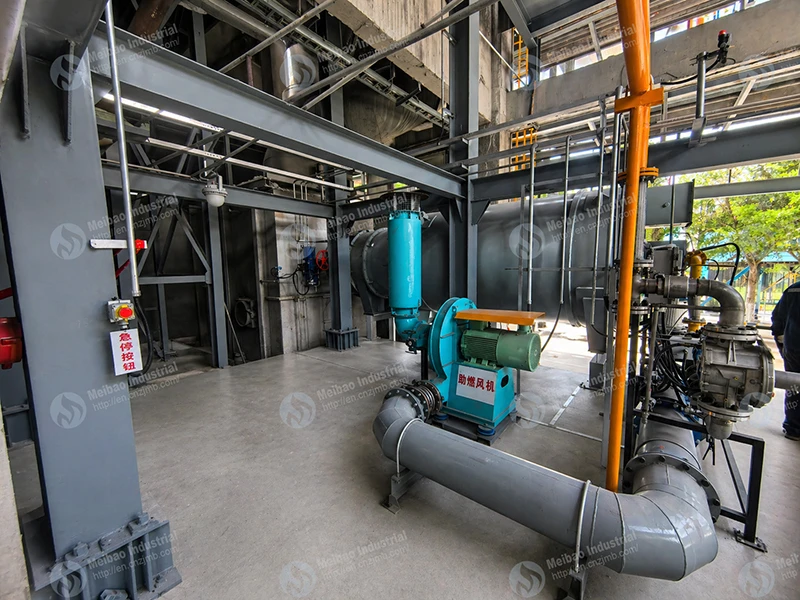
High Level of Automation
Depending on project requirements, the system can include:
- Automatic ignition
- Automatic gas supply
- Gas-pressure monitoring
- Combustion-load regulation
- Air-fuel ratio control
- Hot-air temperature control
- Flame monitoring
- Flame-failure protection
- Gas leakage and related safety interlocks
- Fault alarms
- Centralized control
This reduces manual adjustment and improves operating stability and safety.
Compact System Configuration
Natural gas, LNG and LPG do not require large-scale solid-fuel conveying or ash-handling systems. For factories with limited space, or projects requiring a simpler fuel-handling system, gas-fired hot-air systems can offer a compact configuration.
For producer gas, blast furnace gas and coke oven gas projects, the system is designed according to the existing gas network and actual gas characteristics.
Meet Different Hot-Air Cleanliness Requirements
For production processes where combustion hot air can be used directly, a direct-fired gas hot air furnace can be selected.
For products that must not directly contact combustion flue gas, or where color, odor, cleanliness and product quality are more critical, an indirect gas-fired hot air furnace with a heat exchanger can be used to separate flue gas from process air.
Utilize Industrial By-Product and Low-Calorific-Value Gases
For steel, coking, chemical and other industrial plants with a stable supply of blast furnace gas, coke oven gas, producer gas or other combustible industrial gases, Meibao can evaluate their suitability as a process heat source.
Effective utilization of available industrial gas can help:
- Reduce energy waste
- Reduce purchased-fuel demand
- Optimize the plant energy structure
- Lower part of the process-heating cost
- Improve utilization of industrial by-product energy
Actual suitability depends on the gas lower heating value, composition, pressure, available flow and supply stability.
Energy and Operating Cost Evaluation
The operating cost of a gas-fired hot air system depends strongly on both gas price and gas lower heating value. For different gases, comparing only the price per cubic meter does not provide an accurate energy-cost comparison.
Key factors include:
- Gas type
- Gas Lower Heating Value
- Gas price
- Available gas flow
- Supply pressure
- Supply stability
- Required heat load
- Daily and annual operating hours
- Production-load variation
- LNG / LPG storage and supply costs
- Local prices of oil, coal, biomass and other alternative fuels
After receiving actual gas data and basic production information, Meibao can compare different energy options and estimate gas consumption and operating economics.
Select the Gas-Fired Hot Air Furnace According to the Product and Application
Different products and production processes have different requirements for hot-air temperature, cleanliness, airflow and operating mode.
According to the product and application, Meibao gas-fired hot air furnaces are mainly divided into:
Direct-Fired Gas Hot Air Furnace
For products that can be dried using combustion hot air, or processes with no special requirement for hot-air cleanliness, a direct-fired gas hot air furnace can be used.
The gas is mixed with combustion air and burned stably through the burner. The high-temperature combustion gas is then mixed with air to adjust the temperature before being supplied directly to downstream drying or production equipment.

- Combustion heat is supplied directly to the production process
- Direct heat-transfer process
- High heat-utilization efficiency
- Fast start-up
- Convenient hot-air temperature regulation
- Flexible combustion-load control
- High level of automation
- Relatively compact system
- Suitable for continuous industrial production
- Can be integrated with different drying systems
- Detergent powder spray drying
- Fertilizer drying
- Ceramic and mineral powder drying
- Chemical-material drying
- Industrial raw-material and product drying
- Other processes where direct combustion hot air can be used

Indirect Gas-Fired Hot Air Furnace with Heat Exchanger
For products that must not directly contact combustion flue gas, or processes requiring better control of product color, odor, cleanliness and quality, an indirect gas-fired hot air furnace with a heat exchanger can be used.
High-temperature flue gas generated by gas combustion enters the heat-exchange system and transfers heat to clean air. The combustion flue gas and process air remain separated, and the heated clean air is supplied to downstream drying or production equipment.
The combustion flue gas is discharged through a separate exhaust route and can be treated according to actual project requirements.
- Combustion flue gas is separated from process hot air
- The product does not directly contact combustion flue gas
- Higher hot-air cleanliness
- Reduced influence on product color, odor and quality
- Stable hot-air temperature control
- Convenient start-up and load adjustment
- High level of automation
- Suitable for long-term continuous operation
- Suitable for both new projects and existing heating-system upgrades
- Natural rubber drying
- Industrial drying requiring cleaner process air
- Products with higher color and odor requirements
- Materials that must not directly contact combustion flue gas
- Selected chemical and industrial-product drying
- Other clean hot-air applications

How to Choose Between Direct and Indirect Heating
The first questions are:
What product will be dried, and can the product directly contact combustion flue gas?
Meibao normally evaluates:
- Product to be dried
- Hot-air application
- Production capacity per hour
- Initial moisture content
- Required final moisture content
- Required hot-air temperature
- Exhaust-air temperature
- Whether the product can contact combustion flue gas
- Requirements for product color, odor and cleanliness
- Daily operating hours
- Local environmental requirements
Selection logic
If the product can be dried directly with combustion hot air, a direct-fired gas hot air furnace can generally be considered. If the product must not contact combustion flue gas, or requires higher hot-air cleanliness and better product-quality control, an indirect gas-fired hot air furnace with a heat exchanger is generally more suitable.
The final furnace type and system configuration are determined according to the actual product and production process.
Select the Gas System According to the Available Fuel
Gas-fired hot air furnaces can operate with a wide range of gaseous fuels. The same burner and gas-supply configuration cannot simply be applied to every gas source.

Pipeline Natural Gas
Where a stable industrial natural-gas pipeline is available, pipeline natural gas is generally a convenient option for gas-fired process heating.
- No large fuel-storage facility required
- Continuous gas supply
- Convenient combustion control
- High level of automation
- Compact system configuration
- Flexible start-up and load regulation
- Relatively simple daily fuel management
The design should confirm:
- Natural-gas Lower Heating Value
- Supply pressure
- Maximum available flow
- Pressure stability
- Local natural-gas price
Pressure regulation, metering, safety shut-off and combustion systems are then configured according to the actual gas conditions.
Liquefied Natural Gas (LNG)
For locations without a stable natural-gas pipeline but with reliable LNG supply, LNG can be used as the fuel source. LNG is stored in liquid form and vaporized before being supplied to the combustion system as natural gas.
- Suitable for locations without pipeline natural gas
- Stable combustion
- Convenient automatic control
- Suitable for relatively high industrial heat loads
- Storage and vaporization capacities can be configured according to actual gas demand
For LNG projects, the storage capacity, vaporization capacity, peak gas demand and required continuous operating time should be planned together.
Liquefied Petroleum Gas (LPG)
LPG can be stored and supplied through bulk tanks, cylinder banks or other appropriate systems. Where LPG supply is readily available, it can be used as one of the fuel options for industrial hot-air systems.
- Flexible fuel storage and transportation
- Fast system start-up
- Stable combustion
- Convenient automatic control
- Suitable for various industrial hot-air applications
The storage, vaporization, pressure-regulation and safety system should be configured according to actual gas demand.
Producer Gas
For industrial plants with an existing gas-producer system, or where producer gas can be supplied reliably, a dedicated combustion system can be designed according to the actual gas properties. Producer-gas characteristics can vary with feedstock, gasification process and operating conditions.
- Gas Lower Heating Value
- Gas composition
- Available flow
- Supply pressure
- Gas temperature
- Dust content
- Tar or other impurities
- Supply continuity
Depending on gas quality, dust removal, gas cleaning or other pretreatment may be required before the gas enters the combustion system.
Blast Furnace Gas
Blast furnace gas is an industrial by-product gas generated during ironmaking. Because its Lower Heating Value is relatively low, the hot-air system must be designed carefully around actual gas calorific value, available flow, pressure and supply variation.
- Blast furnace gas Lower Heating Value
- Actual gas composition
- Minimum and maximum available flow
- Supply pressure
- Pressure and flow stability
- Dust content
- Continuous supply capability
For low-calorific-value gases, the burner, combustion chamber and air-fuel system should be designed specifically to support stable combustion and the required heat load.
Effective use of blast furnace gas can improve internal energy utilization in steel plants.
Coke Oven Gas
Coke oven gas is a combustible industrial by-product gas generated during coking operations. Where the gas supply is stable and suitable for combustion, it can be used as an industrial hot-air fuel.
- Coke oven gas Lower Heating Value
- Main gas composition
- Supply pressure
- Available flow
- Supply stability
- Dust and impurity levels
- Whether further gas cleaning is required
The burner, gas valve train, control and safety systems are configured according to the actual gas conditions.
Effective utilization of coke oven gas can reduce purchased-fuel demand and improve by-product energy utilization.


Main Gas Data Required
Pipeline Natural Gas / LNG / LPG Projects - Recommended information includes:
- Gas type
- Lower Heating Value - kcal/Nm³ or MJ/Nm³
- Supply pressure
- Maximum available gas flow
- Local gas price
- Gas-supply stability
- For LNG and LPG projects, also provide: Storage method, Existing or planned storage capacity, Vaporization capacity, Fuel-delivery and replenishment conditions
Producer Gas / Blast Furnace Gas / Coke Oven Gas Projects - Recommended information includes:
- Gas type
- Lower Heating Value - kcal/Nm³ or MJ/Nm³
- Main gas-composition analysis
- Normal supply pressure
- Minimum and maximum supply pressure
- Normal available flow
- Maximum available flow
- Gas temperature
- Dust content
- Moisture or other impurities
- Supply stability
Where available, a complete gas-analysis report allows Meibao to develop a more accurate combustion and hot-air system design.
Low-Calorific-Value Gases Require Special Combustion Evaluation
Producer gas, blast furnace gas and other low-calorific-value industrial gases can differ significantly from natural gas in both calorific value and composition. For such projects, Meibao evaluates:
- Ignition capability
- Flame stability
- Combustion-chamber volume
- Gas-air ratio
- Required gas flow
- Pipeline and valve-train capacity
- Gas-pressure fluctuation
- Load-control range
- Safety interlocks
- Whether auxiliary fuel is required
Where necessary, the combustion system can be specially designed according to the actual gas source and production conditions.
Matching the Gas-Fired Hot Air Furnace with the Drying System
A gas-fired hot air furnace does not operate independently. The furnace, burner, gas-supply system, fans, ductwork, downstream drying equipment and actual production capacity should be matched as one system.

Key project conditions include:
- Product and application
- Production capacity per hour
- Initial moisture content
- Required final moisture content
- Required hot-air temperature
- Exhaust-air temperature
- Required airflow
- Continuous or intermittent operation
- Type of downstream drying equipment
- Gas type
- Gas Lower Heating Value
- Supply pressure and flow
- Fan and duct system
- Local environmental requirements
Meibao can integrate the gas-fired hot air furnace with spray drying towers, rotary drying equipment and other industrial drying systems according to actual project requirements.
Selected Gas-Fired Hot Air Furnace Projects
Meibao has supplied gas-fired and multi-fuel industrial hot-air solutions for different countries and applications.

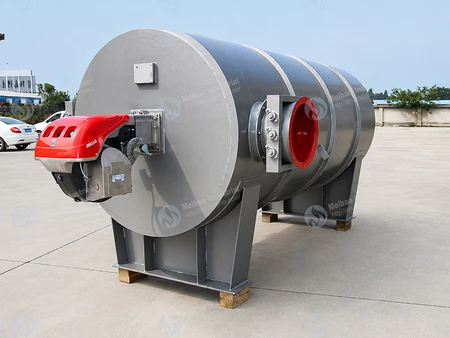
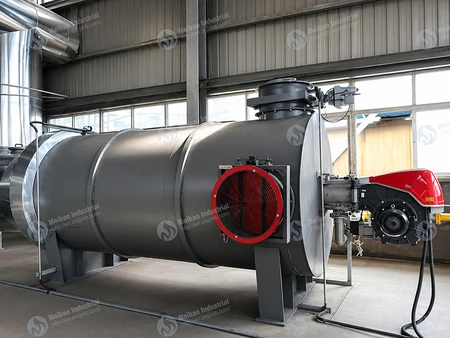
Gas-Fired Hot Air System for Detergent Powder Spray Drying
View Project →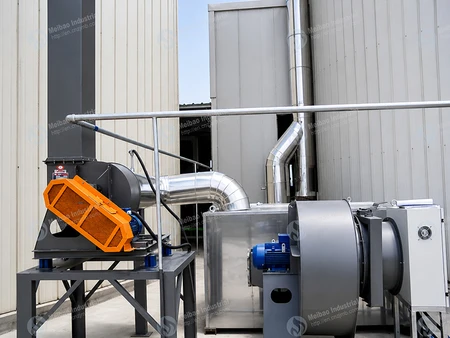

Gas-Fired Hot Air Systems for Industrial Drying
Depending on project conditions, gas-fired hot-air systems can also be used for:
- Fertilizer production
- Ceramic and mineral powder drying
- Chemical materials
- Natural rubber drying
- Industrial raw materials
- Rock wool and other industrial production processes
- Other applications requiring stable industrial hot air
The final equipment configuration is determined according to the product, gas type, hot-air requirements and production process.
Planning a Gas-Fired Hot Air Project?
Complex thermal calculations are not required from the customer during the initial stage.
To help us quickly determine the furnace type, gas-source suitability and required system capacity, please provide basic information such as:
What product will be dried?
What process will the hot air be used for?
What is the production capacity per hour?
What is the initial product moisture content?
What is the required final moisture content?
What hot-air temperature is required?
What is the exhaust-air temperature?
How many hours will the system operate per day?
What type of gas is available locally?
What is the gas Lower Heating Value?
What is the normal gas-supply pressure?
What is the maximum available gas flow?
What is the local gas price?
Is the gas supply continuous and stable?
Is this a new project or an upgrade of an existing system?
What energy source is currently used and what is its price?
What are the main local environmental requirements?
For producer gas, blast furnace gas, coke oven gas and other industrial gases, please also provide where possible: main gas composition, minimum and maximum supply pressure, normal and maximum available flow, gas temperature, dust content, moisture and other impurities, and a complete gas-analysis report if available.
Start Your Gas-Fired Hot Air Project
Tell us your product, application, production capacity, initial moisture content, final moisture content, required hot-air temperature, exhaust-air temperature, and the type, Lower Heating Value, pressure and price of the gas available locally.
For blast furnace gas, coke oven gas, producer gas and other industrial gases, please also provide any available gas-analysis data.
Meibao's engineering team will evaluate the furnace type, burner, gas-supply and pressure-regulation system, heat exchanger, fans and ductwork, gas-safety interlocks and automation to develop an appropriate industrial hot-air solution.
Get in touch with Meibao
Fill out the form below and our engineering team will respond within 24 hours.