


Indirect Hot Air Furnace — Bangladesh
Indirect Hot Air Furnace Project in Bangladesh
Meibao supplied an indirect hot air furnace system for an industrial drying project in Bangladesh.
The furnace transfers combustion heat to process air through a heat exchanger. High-temperature flue gas flows outside the heat-exchange tubes, while ambient air flows inside the tubes. The two air streams remain separated during operation.
This indirect configuration provides heated process air without direct contact between the combustion flue gas and the material-drying air.

Project Information
| Project Location | Bangladesh |
| Equipment | Indirect hot air furnace |
| Heating Method | Indirect heat exchange |
| Heat-Exchange Method | Countercurrent gas-to-air heat exchange |
| Airflow Arrangement | Flue gas outside the tubes and process air inside the tubes |
| Maximum Hot-Air Output Temperature | 600°C |
| Design Thermal Efficiency | Above 75% |
| Hot-Air Temperature Stability | ±5°C |
| Main Application | Industrial drying |
| Project Scope | System engineering, equipment manufacturing, installation guidance and commissioning support |
| Project Status | Equipment supplied for the Bangladesh project |
Project Overview
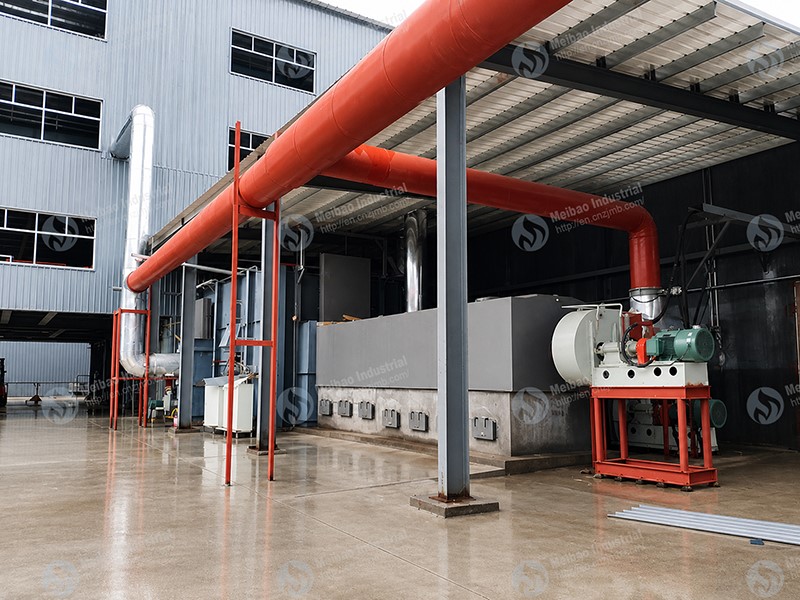
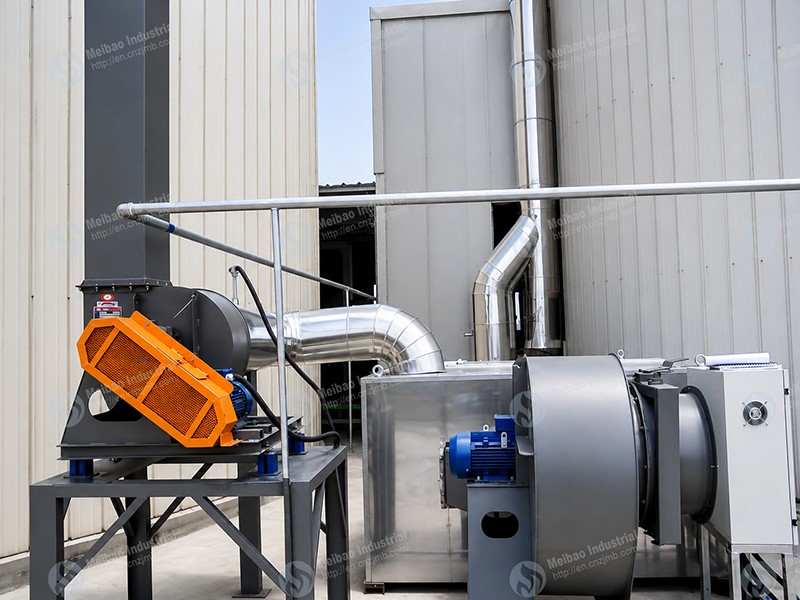
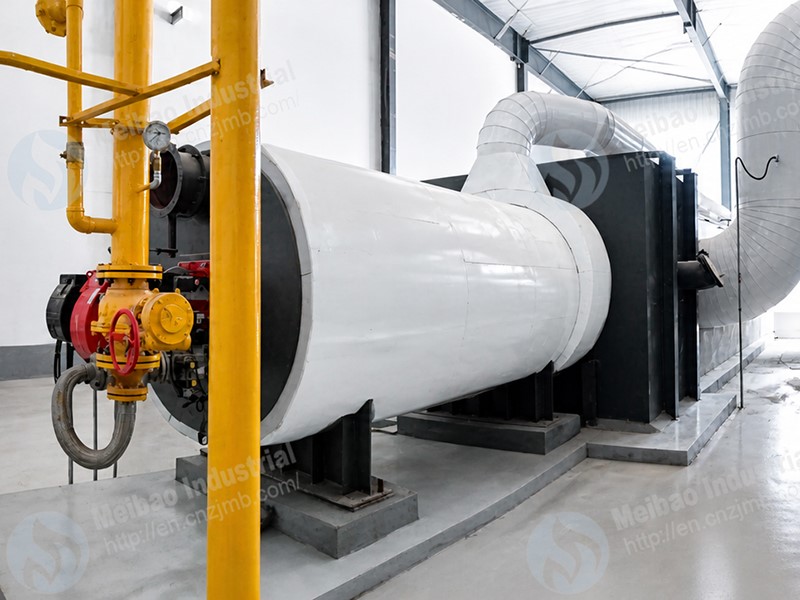
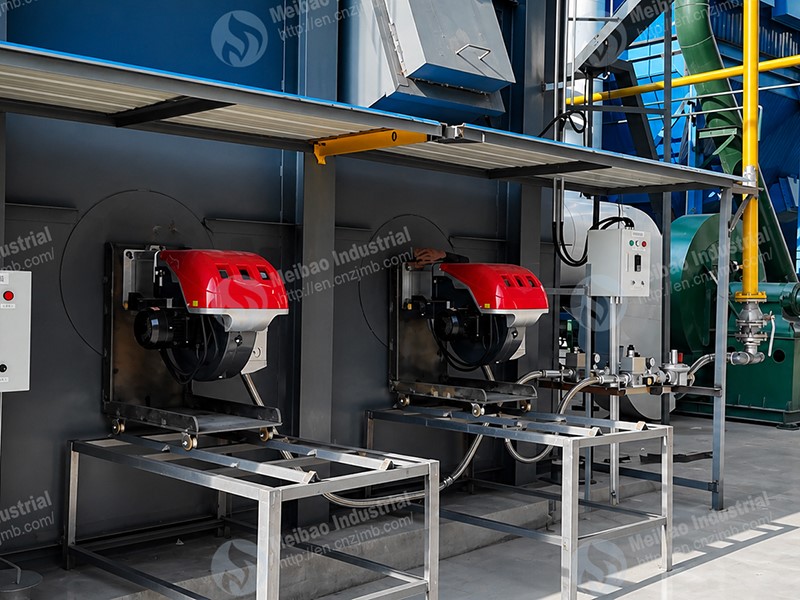
The indirect hot air furnace mainly consists of a combustion unit, heat exchanger, forced-draft fan, induced-draft fan, flue-gas purification system, recirculation ductwork and process hot-air outlet.
Fuel burns in the combustion unit and generates high-temperature flue gas. The flue gas enters the heat exchanger and flows outside the heat-exchange tubes.
Ambient air is delivered by the forced-draft fan into the heat exchanger and flows through the inner tubes. The hot flue gas and ambient air move in opposite directions, transferring heat through the tube walls without mixing.
After heat exchange, part of the flue gas is returned through the recirculation system, while the remaining flue gas enters the exhaust system. The heated process air is delivered to the downstream drying equipment.

Process Flow
Combustion and Flue-Gas Side
Selected Fuel
→ Combustion Unit
→ High-Temperature Flue Gas
→ Flue-Gas Purification
→ Outside of Heat-Exchange Tubes
→ Countercurrent Heat Exchange
→ Partial Flue-Gas Recirculation
→ Remaining Flue-Gas Discharge
Process-Air Side
Ambient Air
→ Forced-Draft Fan
→ Inside of Heat-Exchange Tubes
→ Countercurrent Heat Exchange
→ Indirectly Heated Process Air
→ Hot-Air Duct
→ Downstream Drying Equipment
Process Description
1. Combustion and Heat Generation
The selected fuel is introduced into the combustion unit. The combustion process generates the high-temperature flue gas required for heat exchange.
2. Flue-Gas Purification
The high-temperature flue gas enters the purification section before passing through the main heat-exchange area.
The purification arrangement limits dust accumulation and localized overheating on the heat-exchange tubes.
3. Countercurrent Heat Exchange
High-temperature flue gas flows outside the heat-exchange tubes, while ambient air flows inside the tubes.
The two streams move in opposite directions to strengthen heat transfer while remaining physically separated.
4. Ambient-Air Heating
The forced-draft fan supplies ambient air to the inner tubes of the heat exchanger.
As the air passes through the tube bundle, it absorbs heat through the tube walls and becomes process hot air.
5. Flue-Gas Recirculation and Discharge
After heat exchange, part of the flue gas is returned through the induced-draft and recirculation system. The remaining flue gas is directed to the exhaust system.
6. Hot-Air Delivery
The heated process air is transported through the hot-air duct to the connected drying equipment.
The system provides a maximum hot-air output temperature of 600°C, with temperature stability of ±5°C.
Equipment Series Technical Data
The following data describe the indirect hot air furnace series:
|
Item |
Technical Data |
|
Heating method |
Indirect heat exchange |
|
Fuel options |
Coal, biomass, natural gas or fuel oil |
|
Heat-supply range per unit |
250,000–20,000,000 kcal/h |
|
Maximum hot-air output temperature |
600°C |
|
Design thermal efficiency |
Above 75% |
|
Hot-air temperature stability |
±5°C |
|
Heat-exchange direction |
Countercurrent |
|
Flue-gas position |
Outside the tubes |
|
Process-air position |
Inside the tubes |
Main Equipment and Systems
Fuel combustion unit
Combustion chamber
Flue-gas purification system
Indirect heat exchanger
Heat-exchange tube bundle
Internal tube inserts
Jet-flow distribution structure
Forced-draft fan
Induced-draft fan
Flue-gas recirculation duct
Exhaust duct
Ambient-air inlet
Process hot-air outlet
Temperature monitoring system
Electrical control cabinet
Supporting structure and inspection components
Main Technical Characteristics
Separation of Flue Gas and Process Air
Combustion flue gas flows outside the tubes, while process air flows inside the tubes. The two streams do not mix during normal heat-exchanger operation.
Countercurrent Heat Transfer
The flue gas and process air move in opposite directions to maintain the temperature difference required for heat exchange.
Multiple Fuel Configurations
The furnace series can be configured for coal, biomass, natural gas or fuel oil according to the selected combustion system.
Flue-Gas Purification
The purification section controls entrained dust and reduces direct flame impact on the heat-exchanger tubes.
Heat-Transfer Structure
The heat exchanger uses gas-flow distribution and internal insert structures to increase the effective heat-transfer area and improve heat-transfer conditions.
Temperature Stability
The hot-air system maintains a continuous output temperature stability of ±5°C.
Compatible Industrial Applications
The indirect hot air furnace series is used where process air must remain separate from combustion flue gas.
Typical applications include:
- Food drying
- Pharmaceutical-material drying
- Chemical-product drying
- Feed drying
- Agricultural-product drying
- Other heat-sensitive or cleanliness-focused drying processes
The equipment can be connected to:
- Drying chambers
- Fluidized-bed dryers
- Rotary dryers
- Belt dryers
- Other industrial drying equipment
Technology Background
The indirect hot air furnace series incorporates multiple patented technologies related to combustion, flue-gas purification and heat-exchanger structure.
The furnace design integrates heat generation, flue-gas treatment, countercurrent heat exchange, air supply and process-temperature control into one heating system.


Project Delivery
The Bangladesh project supplied an integrated indirect heating system covering:
- Combustion heat generation
- Flue-gas purification
- Countercurrent heat exchange
- Forced- and induced-draft systems
- Flue-gas recirculation
- Clean process-air heating
- Hot-air temperature control
- Connection with downstream drying equipment
- Installation and commissioning support
Meibao’s Project Capabilities
Meibao provides industrial heating services covering:
- Heating-process design
- Direct and indirect furnace selection
- Multi-fuel combustion-system configuration
- Heat-exchanger engineering
- Equipment manufacturing
- Flue-gas and air-duct design
- Temperature-control-system integration
- Installation guidance
- Commissioning support
- Operator training
- Overseas technical service

Contact Us
Planning an indirect heating system for an industrial drying process?
Send us your fuel type, heat demand, required hot-air temperature, air volume, material information, drying equipment and site conditions. Meibao will prepare the corresponding furnace and heat-exchange system configuration.