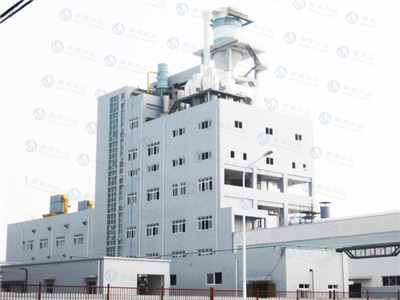

Why the World is Asking for Better Factories

In the past decade, daily chemical production has changed dramatically. Environmental laws have become stricter. Consumers expect cleaner, safer, better products. And for manufacturers, that means plants that use less energy, create less waste, and can adapt quickly to market needs-whether it's laundry powder or liquid detergents.
Meibao is uniquely positioned here. As the only company in China that can design a full-scale daily chemical factory, manufacture the core equipment, and carry out licensed electromechanical installation under national standards, they don't just deliver machines-they deliver the whole package.
Over the years, Meibao has built and upgraded hundreds of production lines in more than 40 countries. The scope is global: Asia, Africa, the Middle East, South America. And each project starts with the same question: "What does this client really need?"
Step One – Listening Before Designing
Before any steel is cut, the Meibao team sits down with the client-sometimes in a boardroom, sometimes at the dusty edge of a construction site. They talk capacity targets, product formulas, local market demands, and even the shape of the land.
"It's not just about squeezing machines into a space," one designer explains. "It's about making the workflow smooth-raw materials in, products out-with minimal waste and maximum safety."
From those conversations comes the master plan: production line layout, process flow, equipment selection, and an automation strategy that fits both the client's budget and their ambitions.

Step Two – Building the Heart of the Plant

Inside Meibao's 45,000 m² manufacturing base, the process shifts from paper to steel. Advanced CNC machining centers cut precise parts. Automated welding systems piece them together. Every component is tested for accuracy.
Some equipment-like standard pumps or fans-comes from trusted partners. But the key machines, like mixers, aging tanks, drying towers, dust collectors, cooling systems, hot air furnaces, and control panels, are all designed and built in-house.
"That's how we keep quality under control," says the factory supervisor. "If something goes wrong, it's on us-and we take that seriously."
Step Three – Installing and Bringing it to Life
When the machines are ready, the installation team takes over. Because Meibao holds a national license for electromechanical installation, they can work to strict safety and quality standards whether the site is in China or halfway across the world.
Once everything is bolted down and wired up, the commissioning engineers run the line-testing speed, quality, and safety. It's the final check before the client takes the keys.

Step Four – Training for Day One

A factory is only as good as the people running it. Before handover, Meibao trains the client's team on everything: how to operate the machines, how to maintain them, how to keep production flowing smoothly.
"We want them to feel confident on day one," says a training engineer. "Because the sooner they're producing, the sooner they see a return on their investment."
Real Projects, Real Results
From 2 tons per hour to 30 tons per hour, Meibao has delivered laundry powder plants of every size. In each case, the process is the same: listen, design, build, install, train, support. The details change, but the approach stays consistent.

More Than a Manufacturer
Ask anyone at Meibao what they do, and they'll tell you: "We build factories." But the truth is, they build more than that. They build trust, efficiency, and a future for their clients' businesses.
Whether it's in Asia, Africa, the Middle East, or South America, Meibao's goal remains the same: to create modern, efficient, eco-friendly daily chemical plants-designed to last, and designed to perform.