
Before detergent raw materials enter the mixing process, they must first be received, transferred, stored, and delivered to the correct production section.
This part of the process may appear simple, but it has a direct influence on dosing accuracy, material loss, production continuity, and final product consistency.
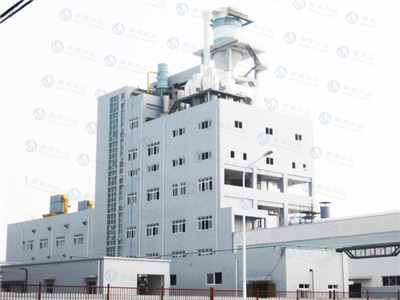
In a recent detergent powder project in Indonesia, Zhejiang Meibao Industrial Technology Co., Ltd. supplied a bulk material feeding and handling system designed around the customer's production capacity, raw material conditions, and factory layout.

Why the Feeding Process Matters
A detergent powder formula normally contains several solid raw materials. These materials need to be moved from the feeding point to the following production equipment in the correct quantity and at the correct time.
An unsuitable feeding system may lead to:
Irregular material flow
Higher material loss
Inaccurate dosing
Dust during handling
Production interruptions
Unstable mixing results
A properly designed system helps keep raw materials moving smoothly before they reach the mixer or slurry preparation section.
Designed Around Raw Material Properties
Different detergent raw materials may have different bulk densities, particle sizes, flow characteristics, and moisture sensitivity.
Because of these differences, the feeding and conveying method should be selected according to the materials used in the customer's formula.
Depending on the project, the material handling system may include:
Bulk material feeding points
Raw material storage equipment
Conveying equipment
Dosing and weighing units
Dust collection connections
Pipes and supporting structures
Automatic control equipment
The final configuration should also match the required production capacity and workshop space.

Supporting Accurate Dosing
The performance of the mixing process depends on whether each material enters the system according to the required formula.
A controlled feeding system helps improve dosing accuracy and reduce repeated manual handling. It also allows operators to manage the flow of materials more clearly during production.
For automated detergent powder plants, the feeding system can be connected with the overall control system. This allows raw material delivery, weighing, and downstream production equipment to operate under a coordinated process.
Reducing Material Loss and Workshop Dust
Powder materials may generate dust during unloading, transfer, and feeding. Poorly arranged material handling can increase cleaning work and raw material loss.
A more enclosed and organized system can help control dust at key transfer points and keep the workshop easier to manage.
The exact dust-control arrangement depends on the type of raw material, feeding method, conveying distance, and factory conditions.
Customized for Different Factory Layouts
The material route in each detergent factory is different. Equipment height, floor space, building structure, feeding location, and connection with the mixing section all affect the design.
Meibao develops customized feeding and handling solutions based on:
Raw material types
Formula requirements
Production capacity
Automation level
Workshop dimensions
Equipment arrangement
Future expansion plans
This helps the feeding system work as part of the complete detergent powder production line rather than as a separate group of machines.

Complete Detergent Powder Project Support
Meibao provides engineering support from process design and equipment manufacturing to installation guidance, commissioning, and turnkey delivery.
The complete detergent powder production solution can cover raw material feeding, dosing, mixing, spray drying, post-addition, dust treatment, packaging, heating, and automatic control.
By coordinating the feeding section with the following production stages, manufacturers can build a smoother and more manageable production process.
Contact us to discuss your customized detergent powder production project.
Email: mbl@cnmbl.com