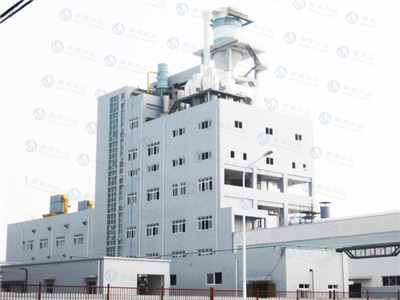

A detergent powder production line does not become ready for operation simply because its main equipment has been manufactured.
Before the system reaches the customer's factory, it must pass through engineering design, component processing, equipment fabrication, assembly, inspection, and delivery preparation. These stages determine whether the equipment can be installed according to plan and whether different production sections can operate together after commissioning.
At Zhejiang Meibao Industrial Technology Co., Ltd., each detergent powder project is developed as a complete engineering system rather than a group of separate machines.

Engineering Work Comes Before Factory Production
Manufacturing starts only after the customer's production requirements have been reviewed.
The project team normally considers:
Required detergent powder capacity
Raw materials and product formula
Selected production process
Workshop dimensions and building height
Local fuel or energy conditions
Automation requirements
Finished-product specifications
Packaging method
Future expansion plans
Based on this information, engineers prepare the process layout, equipment drawings, steel-structure arrangement, material routes, pipe connections, and control requirements.
This early engineering work gives each manufactured component a clear purpose and installation position.
Turning Drawings into Industrial Equipment
Once the design has been confirmed, manufacturing moves into the workshop.
Depending on the project, the process may include:
Steel cutting and forming
Precision machining
Equipment welding
Steel-structure fabrication
Grinding and surface preparation
Surface treatment
Mechanical assembly
Pipe and connection preparation
Electrical and control-system installation
These stages require coordination between the engineering and manufacturing teams. Equipment dimensions, interfaces, supporting structures, and operating requirements must remain consistent with the approved project drawings.

Matching Every Section of the Production Line
A complete detergent powder plant can contain many connected sections, including:
Raw material feeding and conveying
Weighing and dosing
Mixing or slurry preparation
Spray drying
Post-addition and blending
Screening
Dust collection
Hot air supply
Packaging
PLC control
Each section must match the capacity and operating rhythm of the others.
For example, the feeding system must provide enough material for the mixing process. The hot air furnace must meet the heat demand of the drying section. The packaging equipment must be able to handle the output of the finished-powder system.
If these sections are selected independently, the complete line may experience waiting, overload, unstable flow, or additional adjustment after installation.
Checking Installation Interfaces Before Shipment
Many site problems are related not to the main machine itself, but to the details between machines.
Before delivery, important points may be checked, including:
Equipment dimensions
Inlet and outlet positions
Pipe connection sizes
Platform and support locations
Motor and transmission arrangements
Electrical interfaces
Control-system connections
Maintenance access
Required installation accessories
Checking these details in the factory helps identify inconsistencies before the equipment is packed and shipped.
Large production lines cannot always be fully assembled before delivery. However, reviewing major connection points and matching components can reduce unnecessary site modification work.

Quality Control Throughout Manufacturing
Quality control should not take place only during final inspection.
Checks can be carried out during steel processing, welding, machining, assembly, and surface treatment. This makes it easier to identify problems at the stage where they occur.
Depending on the equipment, inspection may cover:
Processing dimensions
Welding conditions
Structural alignment
Component installation
Rotating or moving parts
Surface preparation
Material and component verification
Equipment identification
Packing preparation
This step-by-step approach supports more controlled project execution than relying only on a final visual check.
Preparing for Delivery and Site Work
After manufacturing and inspection, the equipment must be prepared for transportation and installation.
A complete detergent production project may include main equipment, steel structures, platforms, pipelines, instruments, electrical parts, and small installation accessories.
These items need clear identification and organized packing so the site team can understand:
Which production section each part belongs to
Where the equipment should be installed
Which components connect together
Which items are needed during each installation stage
Whether all required parts have arrived
For overseas projects involving several containers, this preparation is an important part of delivery management.

Customized Turnkey Detergent Solutions
Meibao provides customized detergent powder production solutions based on the customer's actual raw materials, capacity, products, automation needs, and factory conditions.
Project support can include:
Process and layout design
Equipment manufacturing
Steel-structure fabrication
Production line integration
Installation guidance
Commissioning
Operator training
Technical service
From individual equipment to complete turnkey production systems, Meibao connects engineering, manufacturing, inspection, and site support under one project plan.
A reliable production line is built through many coordinated details before it ever reaches the customer's factory.
Contact us to discuss your customized detergent powder production line.
Email: mbl@cnmbl.com