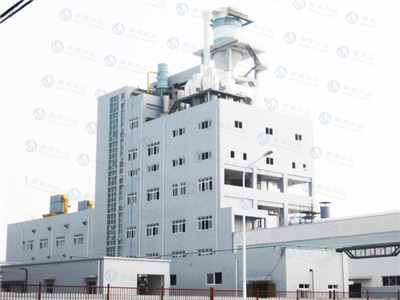

When building a new daily chemical factory, many buyers first focus on the production line equipment. They compare capacity, automation level, energy use, and product range. At the same time, they often arrange the factory building through another supplier. On the surface, this may seem like a normal way to divide the project. But in real factory construction, separating the steel structure building from the production line often creates many problems.
For daily chemical plants, the factory building is not just a space with walls and a roof. It directly affects equipment layout, material transfer, installation efficiency, later maintenance, and even future expansion. Because of this, the steel structure factory building should be planned together with the production line from the beginning.

A Factory Building Should Serve Production
A steel structure building for industrial use should not be treated like a standard warehouse. In a daily chemical project, the workshop needs to match the actual production process.
For example, detergent powder plants may involve raw material storage, dosing, mixing, spray drying, post blending, packing, and finished product transfer. Liquid detergent plants may need space for tanks, mixing systems, pipelines, filling lines, walkways, and cleaning access. Soap plants also have their own layout needs for mixing, refining, plodding, cutting, stamping, and packaging.
If the steel structure building is designed without fully considering these process steps, the customer may face problems later. Equipment may not fit the reserved space well. Material flow may become less smooth. Maintenance areas may be too narrow. Some pipelines or platforms may need extra changes during installation. These issues can increase project time and cost.
That is why the building should be designed to serve production, not the other way around.
Why Matching the Building to the Production Line Matters
When the steel structure factory building is planned together with the production line, the whole project becomes more practical.
The building height can match the equipment needs. The column spacing can avoid affecting important machine positions. The workshop span can leave enough room for installation and material movement. Platform areas, maintenance areas, and access routes can also be arranged in advance.
This kind of matching helps improve space use inside the factory. It also helps reduce repeated design changes during installation. For overseas buyers especially, this is very important. A well-matched factory building can reduce communication problems on site and make project execution smoother.
In short, a building that fits the process can help the whole factory work better from installation to long-term production.
One Supplier, Better Coordination
In many projects, customers need to talk to one company for the factory building, another company for the production line, and sometimes even more parties for installation and site work. This often makes the project harder to control.
When different suppliers work separately, problems may appear at the connection points. The building supplier may not fully understand the equipment layout. The equipment supplier may not control the building details. As a result, the customer has to spend more time on coordination, confirmation, and problem solving.
An integrated solution can reduce this pressure. When the steel structure building and the production line are considered together, planning becomes clearer. Communication becomes more direct. The project also has a better chance of moving forward in the right order.
For customers who want a more efficient factory project, one-stop support is often a better choice.
The Value of an Own Construction Team
Another important point is site execution. Good design alone is not enough. The final result also depends on how the project is built on site.
If the project is handled by too many outside subcontractors, the design idea may not be carried out well during construction. Small differences in understanding can lead to delays or repeated work.
A supplier with its own construction and installation team has a stronger advantage here. The team is already familiar with the building plan, production line needs, and project goals. This helps improve communication efficiency and keeps the work more consistent from drawing to site execution.
For customers, this means better project control, fewer connection problems, and a more stable project process.
More Suitable for Turnkey Daily Chemical Projects
For detergent powder plants, liquid detergent plants, soap plants, and other daily chemical factory projects, integrated planning is especially useful. These projects often need more than a simple workshop. They need a factory building that works together with the complete production line.
A steel structure factory building designed together with the line can help support:
better equipment arrangement
smoother production flow
easier installation and maintenance
more efficient use of workshop space
easier future expansion
This is why more buyers now prefer a supplier that can support both the building and the production project, instead of buying them separately.


Conclusion
A steel structure factory building should not be seen as an isolated product. In daily chemical factory projects, it is an important part of the whole production system.
When the building is designed according to the production line, the factory becomes easier to build, easier to install, and more practical for long-term operation. When the supplier can also provide integrated planning and its own construction team, the project can be managed more efficiently and with fewer problems.
For customers planning a new daily chemical factory, choosing a steel structure building solution that matches the production line is not only a design choice. It is also a practical way to improve project quality and reduce project risk.